How to Build Smart Home Routines That Work
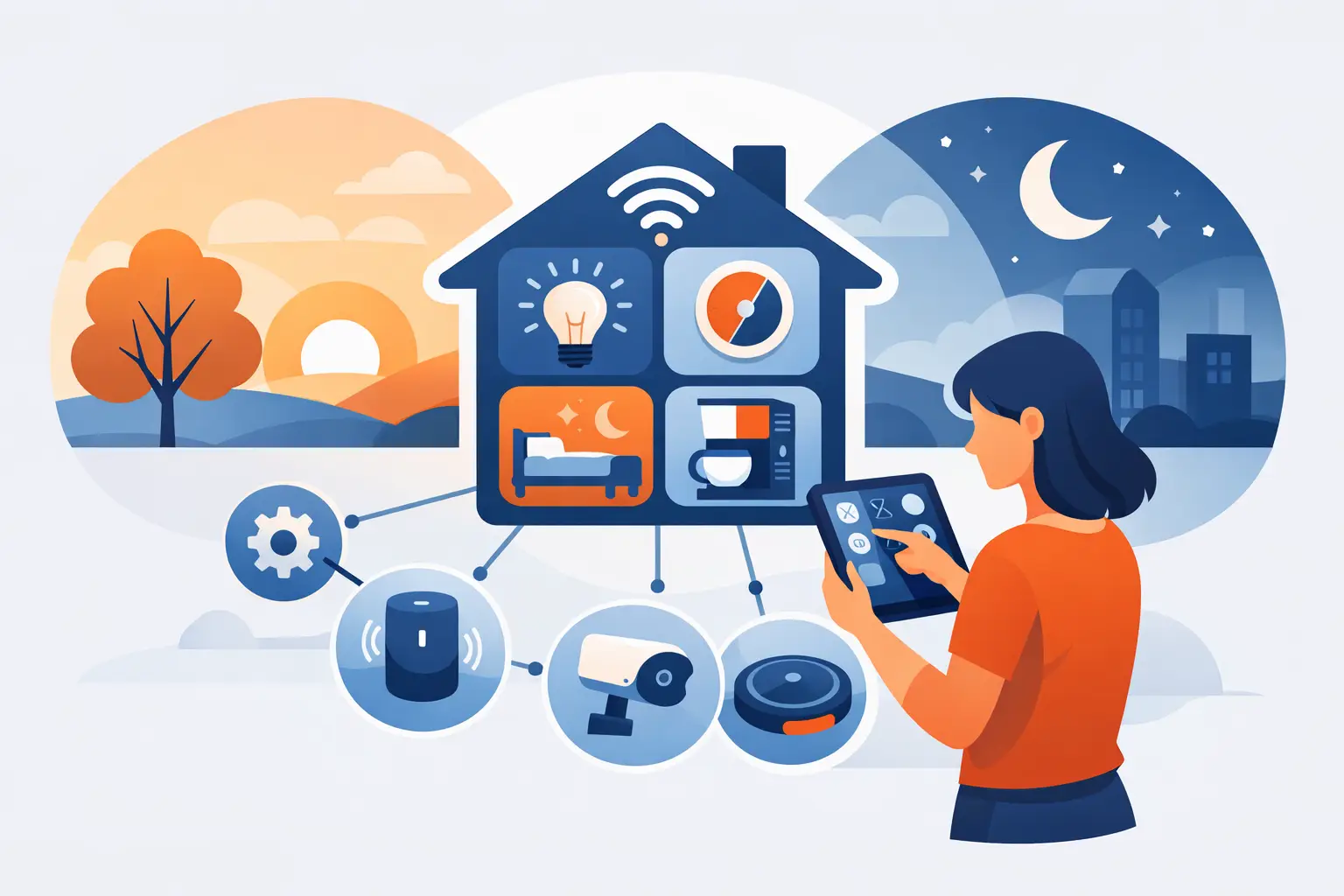
A thoughtfully connected home should feel quietly attentive, not like a dashboard demanding your attention. Learning how to build smart home routines begins with a simple shift: stop thinking about individual devices and start designing moments. The best routines handle small, repeatable tasks around your schedule, so your home feels more comfortable, polished, and prepared from the first morning light to the final lock of the evening.
A smart routine can turn on a favorite lamp as the sun sets, lower the thermostat after everyone leaves, or create a calmer bedtime atmosphere without a series of separate commands. The goal is not to automate every second. It is to choose the details that make daily life feel easier and more considered.
Start With Moments, Not Devices
It is tempting to begin with the newest speaker, display, camera, or lighting system. Start somewhere more useful: the points in your day when you repeat the same action. Those moments reveal where automation can add genuine value.
Think about the first ten minutes after you wake up, the transition from work to home, preparing dinner, leaving for the weekend, or settling in for a movie. Each has a clear mood and a few predictable needs. A morning routine may gradually bring up lighting, adjust the temperature, and begin a playlist. An evening routine might close smart shades, switch on warm accent lights, and arm exterior cameras.
Keep the first routine narrow. One trigger and two or three actions are enough. A routine that works reliably is more luxurious than an elaborate sequence that needs constant adjustment.
Map the friction in your day
Walk through a typical weekday and notice small points of friction. Maybe the entryway is dark when you arrive with groceries. Perhaps the patio lights stay on long after everyone comes inside, or the house runs warmer than necessary while it is empty. These are excellent candidates because the benefit is immediate and easy to measure.
Also consider who shares the home. A routine that suits one person may frustrate a family member, roommate, guest, or pet. For example, an automatic bedtime command that shuts down every light at 10 p.m. is less helpful if someone is still reading in the living room. Build for the household you have, not an idealized version of it.
Choose One Control Center
A cohesive smart home needs a primary platform to coordinate its devices. Whether you prefer voice control, a mobile app, or a wall-mounted display, choose the system your household will actually use. The most advanced setup is not the right setup if visitors cannot turn on a light without asking for help.
Before adding new products, confirm that they work with your selected ecosystem. Compatibility matters most with devices that need to interact, such as smart locks, sensors, lighting, thermostats, plugs, cameras, and shades. A premium home should feel intentional, and a mix of disconnected apps quickly undermines that experience.
This does not mean every device must come from one brand. It does mean you should be selective. Look for dependable connectivity, clear privacy settings, manual controls, and support for common smart-home standards when possible. A physical switch, conventional key, or local control remains valuable when Wi-Fi is down or a phone battery is not.
How to Build Smart Home Routines Around Real Triggers
The trigger is what starts a routine. The simplest triggers are based on time, sunrise and sunset, a voice phrase, or a button press. They are also usually the most reliable. Once those are working well, location, occupancy, door sensors, temperature, and motion can make your automations more responsive.
A sunset trigger is ideal for exterior lighting because seasonal daylight changes are handled automatically. A door sensor can prompt a welcome scene when you enter through the garage. A temperature sensor can activate a fan in a sun-filled room before it becomes uncomfortable.
Use location triggers with care. They can be convenient for an Away routine, but phone location is not always precise, and one person leaving does not mean the house is empty. For a shared home, set an Away routine to run only when every household member is gone, or use a confirmation prompt for higher-stakes actions such as locking doors and arming security devices.
Build conditions into the routine
Conditions prevent a useful routine from becoming an annoyance. Instead of having motion turn on hallway lights every time someone walks by, add a condition that it runs only after sunset and only at a low brightness. Rather than starting a morning playlist every day at 6:30 a.m., limit it to weekdays or make it dependent on an alarm.
These small refinements are where a smart home begins to feel tailored. They also reduce unnecessary energy use, interruptions, and false alerts. Give each routine a name that describes its purpose, such as “Arrive Home,” “Kitchen Wind-Down,” or “Weekend Patio.” Clear names make editing easier and help everyone use the home with confidence.
Build a Foundation With High-Impact Routines
A few well-designed routines can elevate the whole home. Begin with the areas where convenience, atmosphere, and peace of mind meet.
The Morning Start can brighten bedroom or kitchen lights gradually, set a comfortable temperature, and turn on a coffee maker connected to a smart plug only if it is designed for safe automatic use. Avoid automating appliances that create heat or require active supervision unless the manufacturer specifically supports it.
The Arrival Scene can illuminate the entryway, living room, or driveway after dark. If you use a smart lock, a unique code for household members and trusted guests gives you more control than leaving a spare key outside. Keep the lighting refined rather than overly bright – a layered combination of entry, table, and accent lighting feels more welcoming.
The Away Routine can turn off nonessential lights, adjust the thermostat, close shades, and send a reminder if a door is unlocked. Be cautious about automatically powering down devices that need to remain on, including network equipment, aquarium systems, medical devices, or certain pet-care equipment.
The Evening Retreat is often the routine people appreciate most. At a chosen time, shift common-area lighting to a warmer, lower level, close shades for privacy, and turn off entertainment equipment after a period of inactivity. This is an easy way to make an ordinary night at home feel more restorative.
Let Lighting Lead the Experience
Lighting delivers the most visible transformation for most homes. It shapes how a room looks, supports the task at hand, and establishes a sense of rhythm throughout the day. Start with dimmable smart bulbs or switches in the spaces you use most, then create scenes rather than relying on one all-purpose setting.
A kitchen may need clean, bright illumination for meal prep and softer island pendants for dinner. A living room can shift from focused daytime light to a low, warm movie setting. In bedrooms, gentle bedside lighting is usually more useful than a bright overhead fixture when winding down.
Smart switches are often the better long-term choice for hardwired fixtures, especially in shared spaces. They preserve familiar wall control for guests and can control several bulbs at once. Smart bulbs offer more flexibility for lamps, color temperature, and smaller decorative moments. The right mix depends on your wiring, fixture style, and whether you rent or own.
Protect Privacy and Keep Control Simple
Connected convenience should never come at the expense of security. Use unique passwords, enable two-factor authentication, and install software updates for hubs, cameras, locks, and routers. Review which household members have access, and remove old guest codes or shared permissions when they are no longer needed.
For cameras and voice-enabled devices, think carefully about placement. Avoid private areas, review recording and storage preferences, and make sure guests understand when cameras are in use. A well-designed smart home earns trust by being predictable and discreet.
Finally, preserve a manual path for everyday tasks. A guest should be able to use a light switch. A child or older relative should be able to adjust the temperature without memorizing a voice command. Technology should support the home’s comfort, not become a gatekeeper to it.
Refine, Don’t Over-Automate
After a routine has been running for a week or two, review it honestly. Does it save time? Does it improve the mood of the room? Does anyone override it regularly? If the answer is no, simplify or remove it. The most satisfying automations are nearly invisible because they anticipate a need without making a performance of it.
As your home evolves, add routines gradually around the spaces that matter most: a more welcoming entry, a calmer bedroom, a better-equipped kitchen, or an outdoor setting ready for long evenings. Viridin’s curated home and technology selections can help you choose pieces that bring both elevated design and everyday usefulness into the same space.
A smart home is at its best when it reflects the way you want to live – considered, comfortable, and ready before you have to ask.










Leave a comment