12 Backyard Privacy Screen Ideas With Style
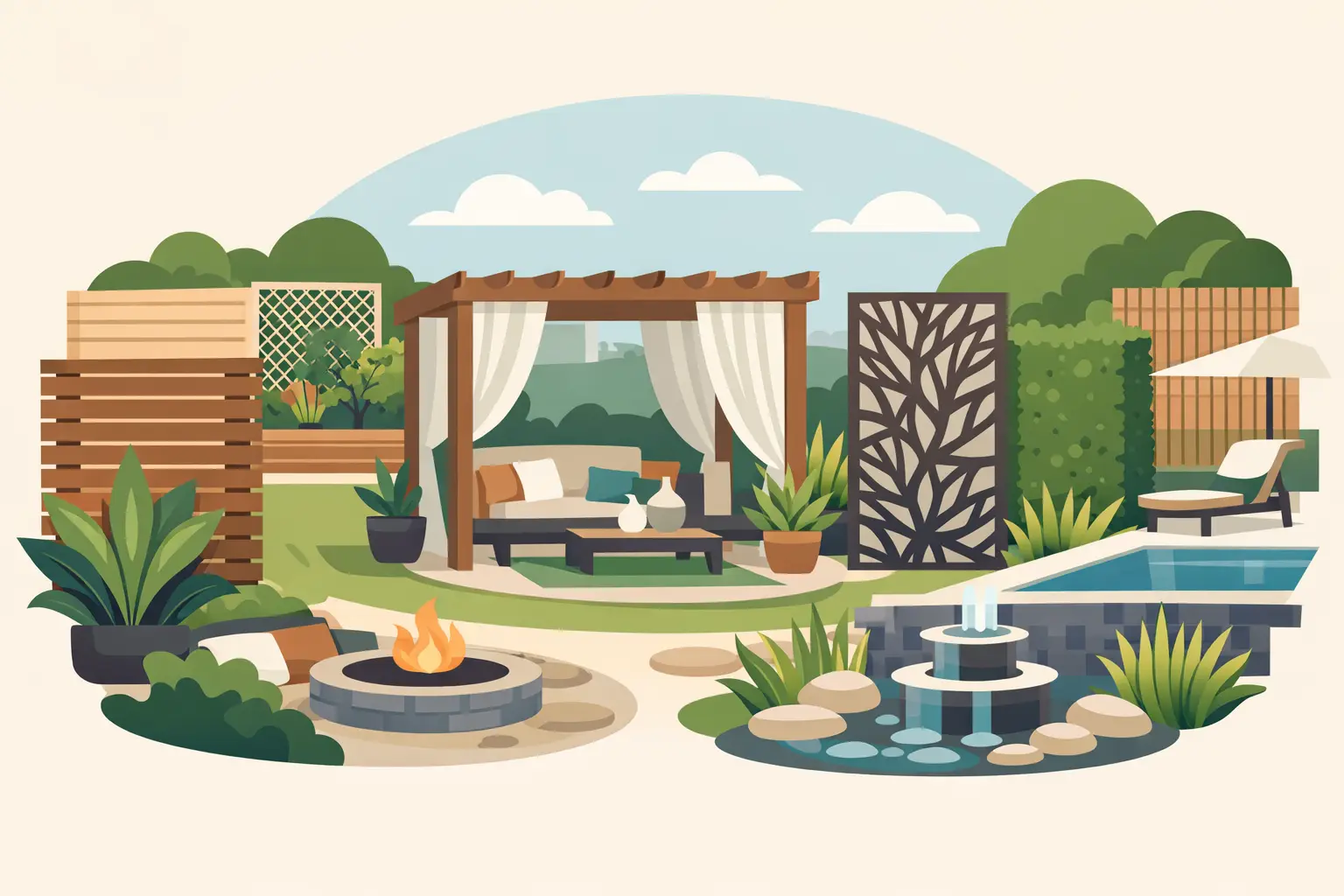
A beautiful outdoor space can still feel unfinished when it sits in full view of a neighboring window, a busy sidewalk, or the house next door. The best backyard privacy screen ideas do more than block a sightline. They shape the atmosphere of a patio, pool deck, or dining area, creating the sense that your backyard was designed as a true extension of the home.
The right choice depends on what you need to conceal, how permanent you want the solution to be, and the look you want to carry from indoors to out. A sleek slatted screen may suit a modern terrace, while layered greenery brings softness to a garden setting. Start with the view you want to improve, then choose materials that feel intentional rather than temporary.
Start With the Sightline, Not the Screen
Before ordering panels or planting a hedge, spend a few minutes standing where you actually relax. Sit in the outdoor dining chair, settle into the lounge seating, and look toward the areas that feel exposed. Privacy is rarely an all-or-nothing issue. Often, a screen only needs to cover the upper half of a fence, one side of a seating area, or a narrow gap between structures.
Measure the height and width of the view you want to block. A 6-foot screen may be ample beside a patio, but a raised deck can call for taller coverage. Also consider sunlight, wind, drainage, and access to gates or utility equipment. A screen that looks polished on installation day should still feel practical when it is time to mow, entertain, or maintain the yard.
Backyard Privacy Screen Ideas That Feel Elevated
1. Horizontal wood slats
Horizontal slat screens offer a clean, architectural finish that works especially well with contemporary outdoor furniture. Spaced boards provide partial privacy while allowing air and filtered light to pass through. For more coverage, reduce the gaps or add a dark backing panel behind the slats.
Cedar, redwood, and treated lumber are classic choices, although composite boards deliver a more uniform look with lower maintenance. Warm wood tones make a strong partner for stone pavers, black metal furniture, and neutral outdoor textiles. The trade-off is upkeep: natural wood needs periodic sealing or staining to preserve its finish.
2. Decorative metal panels
Laser-cut metal panels turn privacy into a design feature. Geometric, botanical, and abstract patterns can create a tailored focal point behind a dining table or outdoor sofa, especially when paired with low-profile planters.
Choose powder-coated aluminum or steel for better weather resistance. Because perforated panels do not fully block a view, they are best for screening a close but not intrusive sightline. They also cast striking shadows in afternoon light, giving a smaller patio a more considered, high-end feel.
3. Tall planters with structured greenery
For flexible privacy without a permanent build, use oversized planters in a row. Tall grasses, upright evergreens, bamboo varieties suited to containers, or slim trellised vines can form a living wall around a balcony, patio, or pool lounge.
This approach looks especially refined when planters share the same material and scale. Matte black, textured stone, or warm wood vessels give the arrangement a curated appearance. Remember that container plants need consistent watering and may require winter protection depending on your climate. Select plants for mature height, not the size they are on the day they arrive.
4. A layered hedge border
A hedge delivers the most natural form of privacy, and it can add meaningful depth to a flat backyard. Evergreen varieties create year-round coverage, while a mixed border of shrubs, ornamental grasses, and flowering plants feels less formal and more expressive.
Hedges take time to fill in, so this is a better long-term investment than an immediate fix. They also need room to grow, which can be a challenge in compact yards. For homeowners who value a soft, established landscape over a hard-edged barrier, the payoff is a backyard that feels tucked away rather than closed in.
5. A pergola with curtains or side panels
When the privacy issue is overhead or along one edge of a lounge area, a pergola creates a destination within the yard. Add weather-ready curtains, shade panels, or retractable side screens to control visibility and sun exposure as the day changes.
This option is ideal for outdoor dining, hot tub areas, and patios that need a more intimate mood after dark. Choose substantial hardware and fabrics made for outdoor use. Lightweight curtains can look inviting, but they may become frustrating in exposed, windy locations unless they can be secured neatly to the posts.
6. Reed, bamboo, or willow screening
Natural screening rolls are an approachable choice for disguising an existing chain-link fence or worn boundary. Bamboo, reed, and willow instantly bring warmth and texture to casual garden spaces, especially alongside terracotta, teak, and lush planting.
These materials are not the longest-lasting solution in harsh weather, and their coverage can be inconsistent up close. Still, they offer a fast visual upgrade with an organic character that manufactured panels cannot always replicate. Use them where a relaxed, resort-inspired look fits the setting.
7. A trellis covered in climbing plants
A trellis gives climbing plants a framework while adding privacy before the planting fully matures. It can stand alone as an accent wall, extend above a fence, or divide distinct zones in a larger yard.
Evergreen climbers provide more consistent screening, while flowering vines bring seasonal color and fragrance. Match the plant to your growing zone, available sunlight, and willingness to prune. Some fast-growing vines are beautiful but aggressive, so it pays to choose a variety that will not overwhelm nearby structures.
8. Freestanding outdoor divider panels
Freestanding screens are among the most versatile backyard privacy screen ideas for renters, small patios, and spaces that change with the season. Use one behind a pair of lounge chairs, beside an outdoor shower, or at the edge of a dining setup where guests need a little separation from the rest of the yard.
Look for weighted bases, weather-resistant frames, and panels sturdy enough for local wind conditions. Foldable designs make storage easier, though they usually offer less stability than installed screens. Their real advantage is freedom: you can revise the layout whenever the occasion calls for it.
9. Mixed-material fence toppers
If your existing fence is structurally sound but too low, a topper can add privacy without requiring a full replacement. Slatted wood, metal lattice, frosted acrylic, or narrow trellis panels can extend the visual height while keeping the base fence intact.
This is a smart route when the primary issue is an overlooking second-story window or a neighbor’s elevated deck. Check local codes and homeowners association rules before adding height. A well-designed topper should look integrated with the fence, not like an afterthought stacked on top.
10. Frosted glass or acrylic panels
Frosted panels are a sophisticated answer for modern patios and poolside spaces where light matters as much as privacy. They obscure direct views without creating the heavy, boxed-in feeling of a solid wall.
Use tempered glass or outdoor-rated acrylic in a secure frame. Glass offers a premium finish but can require more cleaning, while acrylic is lighter and often easier to install. Both work beautifully with metal frames, minimalist furniture, and landscape lighting.
11. Outdoor curtains on a cable system
For an airy, hotel-inspired setup, suspend outdoor curtains from a cable or track between posts. This works particularly well for a covered patio, pergola, or narrow side yard where you want adjustable coverage rather than a fixed barrier.
Choose fade-resistant fabric in a calm neutral or a tailored stripe, and use tiebacks when the panels are open. Curtains are less suited to severe weather, but in a protected setting they add movement, softness, and an inviting sense of privacy for entertaining.
12. A screen that doubles as a feature wall
The most successful screens often do more than hide the neighbor’s yard. Build in narrow shelves for potted herbs, hang weatherproof art, incorporate a vertical garden, or place soft landscape lighting at the base. A plain boundary becomes a backdrop for the space you want to enjoy.
This approach is especially valuable in smaller yards, where every structure should earn its footprint. Keep additions edited rather than crowded. One sculptural planter, a pair of lanterns, or a carefully chosen wall fountain can make the screen feel like part of a complete outdoor room.
Choose Materials for Your Climate and Maintenance Style
A refined backyard should not demand constant repairs. In humid or rainy regions, prioritize rot-resistant wood, powder-coated metal, composite materials, and hardware designed to resist corrosion. In high-sun areas, look for UV-stable fabrics and plants that can handle heat without daily intervention.
Wind deserves equal attention. Solid panels catch more force than open slats or trellis designs, so secure posts deeply and use appropriate anchors. If your yard is exposed, a semi-open screen may be the smarter and safer choice. It softens views while reducing pressure on the structure.
Color also changes the effect. Dark panels visually recede, making greenery and furnishings stand out. Light finishes can brighten a shaded yard but may show dirt more easily. Carry one or two materials from the home or patio into the screen so the result feels cohesive: black metal, warm oak tones, pale stone, or a soft neutral composite.
Make Privacy Part of the Outdoor Experience
A privacy screen is most effective when it supports the way you use the space. Position it to frame a conversation area, shelter a dining table, or create a calmer view from the kitchen. Add layered lighting, comfortable seating, and planters with texture, and the screen becomes a quiet statement of design rather than a barrier.
The goal is not to shut out every surrounding view. It is to create a backyard that feels distinctly yours: composed, comfortable, and ready for the moments you want to keep close to home.
A beautiful outdoor space can still feel unfinished when it sits in full view of a neighboring window, a busy sidewalk, or the house next door. The best backyard privacy screen ideas do more than block a sightline. They shape the atmosphere of a patio, pool deck, or dining area, creating the sense that your backyard was designed as a true extension of the home.
The right choice depends on what you need to conceal, how permanent you want the solution to be, and the look you want to carry from indoors to out. A sleek slatted screen may suit a modern terrace, while layered greenery brings softness to a garden setting. Start with the view you want to improve, then choose materials that feel intentional rather than temporary.
Start With the Sightline, Not the Screen
Before ordering panels or planting a hedge, spend a few minutes standing where you actually relax. Sit in the outdoor dining chair, settle into the lounge seating, and look toward the areas that feel exposed. Privacy is rarely an all-or-nothing issue. Often, a screen only needs to cover the upper half of a fence, one side of a seating area, or a narrow gap between structures.
Measure the height and width of the view you want to block. A 6-foot screen may be ample beside a patio, but a raised deck can call for taller coverage. Also consider sunlight, wind, drainage, and access to gates or utility equipment. A screen that looks polished on installation day should still feel practical when it is time to mow, entertain, or maintain the yard.
Backyard Privacy Screen Ideas That Feel Elevated
1. Horizontal wood slats
Horizontal slat screens offer a clean, architectural finish that works especially well with contemporary outdoor furniture. Spaced boards provide partial privacy while allowing air and filtered light to pass through. For more coverage, reduce the gaps or add a dark backing panel behind the slats.
Cedar, redwood, and treated lumber are classic choices, although composite boards deliver a more uniform look with lower maintenance. Warm wood tones make a strong partner for stone pavers, black metal furniture, and neutral outdoor textiles. The trade-off is upkeep: natural wood needs periodic sealing or staining to preserve its finish.
2. Decorative metal panels
Laser-cut metal panels turn privacy into a design feature. Geometric, botanical, and abstract patterns can create a tailored focal point behind a dining table or outdoor sofa, especially when paired with low-profile planters.
Choose powder-coated aluminum or steel for better weather resistance. Because perforated panels do not fully block a view, they are best for screening a close but not intrusive sightline. They also cast striking shadows in afternoon light, giving a smaller patio a more considered, high-end feel.
3. Tall planters with structured greenery
For flexible privacy without a permanent build, use oversized planters in a row. Tall grasses, upright evergreens, bamboo varieties suited to containers, or slim trellised vines can form a living wall around a balcony, patio, or pool lounge.
This approach looks especially refined when planters share the same material and scale. Matte black, textured stone, or warm wood vessels give the arrangement a curated appearance. Remember that container plants need consistent watering and may require winter protection depending on your climate. Select plants for mature height, not the size they are on the day they arrive.
4. A layered hedge border
A hedge delivers the most natural form of privacy, and it can add meaningful depth to a flat backyard. Evergreen varieties create year-round coverage, while a mixed border of shrubs, ornamental grasses, and flowering plants feels less formal and more expressive.
Hedges take time to fill in, so this is a better long-term investment than an immediate fix. They also need room to grow, which can be a challenge in compact yards. For homeowners who value a soft, established landscape over a hard-edged barrier, the payoff is a backyard that feels tucked away rather than closed in.
5. A pergola with curtains or side panels
When the privacy issue is overhead or along one edge of a lounge area, a pergola creates a destination within the yard. Add weather-ready curtains, shade panels, or retractable side screens to control visibility and sun exposure as the day changes.
This option is ideal for outdoor dining, hot tub areas, and patios that need a more intimate mood after dark. Choose substantial hardware and fabrics made for outdoor use. Lightweight curtains can look inviting, but they may become frustrating in exposed, windy locations unless they can be secured neatly to the posts.
6. Reed, bamboo, or willow screening
Natural screening rolls are an approachable choice for disguising an existing chain-link fence or worn boundary. Bamboo, reed, and willow instantly bring warmth and texture to casual garden spaces, especially alongside terracotta, teak, and lush planting.
These materials are not the longest-lasting solution in harsh weather, and their coverage can be inconsistent up close. Still, they offer a fast visual upgrade with an organic character that manufactured panels cannot always replicate. Use them where a relaxed, resort-inspired look fits the setting.
7. A trellis covered in climbing plants
A trellis gives climbing plants a framework while adding privacy before the planting fully matures. It can stand alone as an accent wall, extend above a fence, or divide distinct zones in a larger yard.
Evergreen climbers provide more consistent screening, while flowering vines bring seasonal color and fragrance. Match the plant to your growing zone, available sunlight, and willingness to prune. Some fast-growing vines are beautiful but aggressive, so it pays to choose a variety that will not overwhelm nearby structures.
8. Freestanding outdoor divider panels
Freestanding screens are among the most versatile backyard privacy screen ideas for renters, small patios, and spaces that change with the season. Use one behind a pair of lounge chairs, beside an outdoor shower, or at the edge of a dining setup where guests need a little separation from the rest of the yard.
Look for weighted bases, weather-resistant frames, and panels sturdy enough for local wind conditions. Foldable designs make storage easier, though they usually offer less stability than installed screens. Their real advantage is freedom: you can revise the layout whenever the occasion calls for it.
9. Mixed-material fence toppers
If your existing fence is structurally sound but too low, a topper can add privacy without requiring a full replacement. Slatted wood, metal lattice, frosted acrylic, or narrow trellis panels can extend the visual height while keeping the base fence intact.
This is a smart route when the primary issue is an overlooking second-story window or a neighbor’s elevated deck. Check local codes and homeowners association rules before adding height. A well-designed topper should look integrated with the fence, not like an afterthought stacked on top.
10. Frosted glass or acrylic panels
Frosted panels are a sophisticated answer for modern patios and poolside spaces where light matters as much as privacy. They obscure direct views without creating the heavy, boxed-in feeling of a solid wall.
Use tempered glass or outdoor-rated acrylic in a secure frame. Glass offers a premium finish but can require more cleaning, while acrylic is lighter and often easier to install. Both work beautifully with metal frames, minimalist furniture, and landscape lighting.
11. Outdoor curtains on a cable system
For an airy, hotel-inspired setup, suspend outdoor curtains from a cable or track between posts. This works particularly well for a covered patio, pergola, or narrow side yard where you want adjustable coverage rather than a fixed barrier.
Choose fade-resistant fabric in a calm neutral or a tailored stripe, and use tiebacks when the panels are open. Curtains are less suited to severe weather, but in a protected setting they add movement, softness, and an inviting sense of privacy for entertaining.
12. A screen that doubles as a feature wall
The most successful screens often do more than hide the neighbor’s yard. Build in narrow shelves for potted herbs, hang weatherproof art, incorporate a vertical garden, or place soft landscape lighting at the base. A plain boundary becomes a backdrop for the space you want to enjoy.
This approach is especially valuable in smaller yards, where every structure should earn its footprint. Keep additions edited rather than crowded. One sculptural planter, a pair of lanterns, or a carefully chosen wall fountain can make the screen feel like part of a complete outdoor room.
Choose Materials for Your Climate and Maintenance Style
A refined backyard should not demand constant repairs. In humid or rainy regions, prioritize rot-resistant wood, powder-coated metal, composite materials, and hardware designed to resist corrosion. In high-sun areas, look for UV-stable fabrics and plants that can handle heat without daily intervention.
Wind deserves equal attention. Solid panels catch more force than open slats or trellis designs, so secure posts deeply and use appropriate anchors. If your yard is exposed, a semi-open screen may be the smarter and safer choice. It softens views while reducing pressure on the structure.
Color also changes the effect. Dark panels visually recede, making greenery and furnishings stand out. Light finishes can brighten a shaded yard but may show dirt more easily. Carry one or two materials from the home or patio into the screen so the result feels cohesive: black metal, warm oak tones, pale stone, or a soft neutral composite.
Make Privacy Part of the Outdoor Experience
A privacy screen is most effective when it supports the way you use the space. Position it to frame a conversation area, shelter a dining table, or create a calmer view from the kitchen. Add layered lighting, comfortable seating, and planters with texture, and the screen becomes a quiet statement of design rather than a barrier.
The goal is not to shut out every surrounding view. It is to create a backyard that feels distinctly yours: composed, comfortable, and ready for the moments you want to keep close to home.










Leave a comment