Gas Generator Versus Battery Backup for Your Home
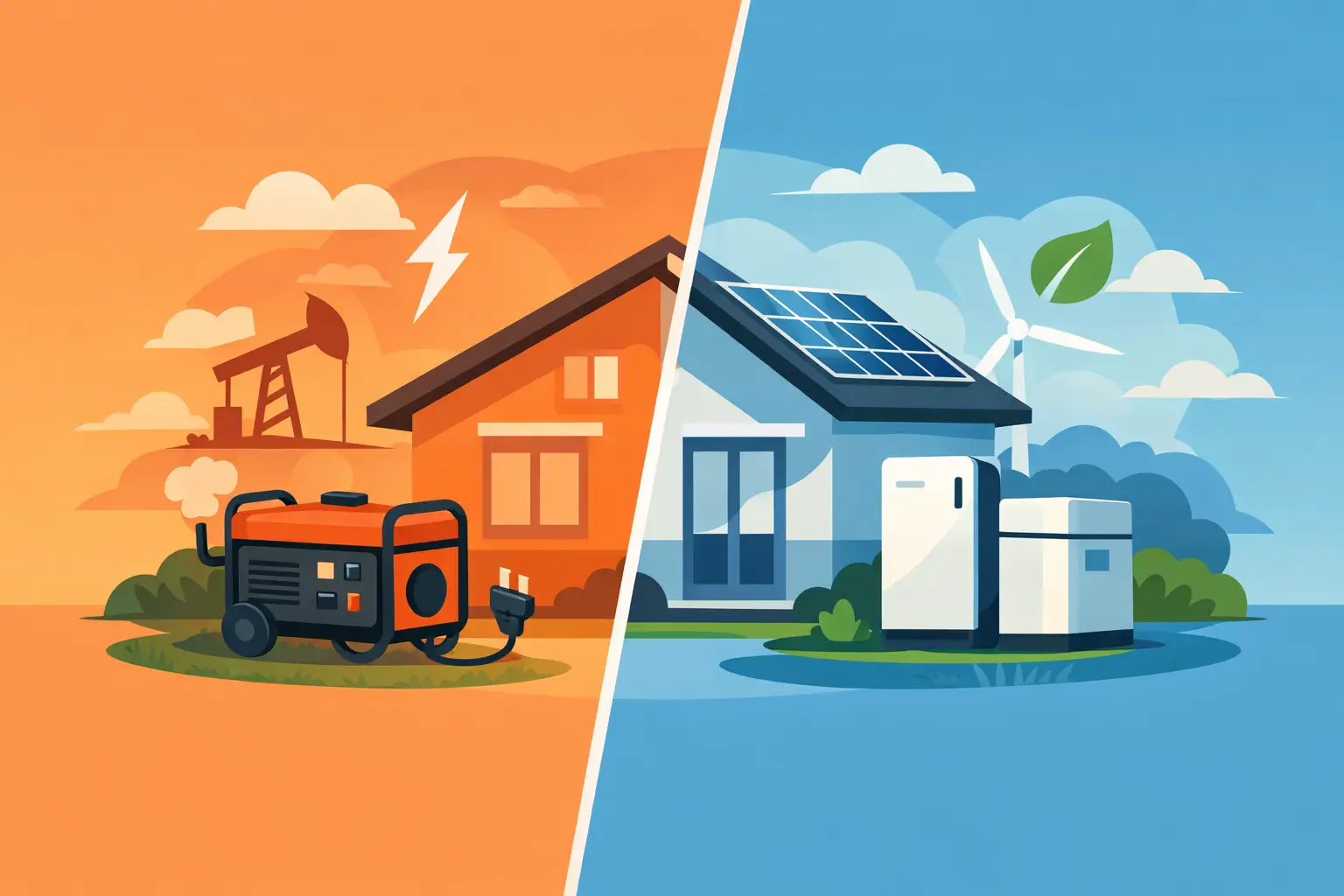
A power outage changes the feel of a home quickly. The refrigerator becomes a countdown, the Wi-Fi disappears, the house gets quieter than expected, and every device suddenly competes for the last charged outlet. In the choice of a gas generator versus battery backup, the better option is not simply the one with the biggest number on the box. It is the one that protects the routines, rooms, and essentials you do not want to lose.
For some households, that means keeping a few core electronics, lights, and medical devices operating without noise or fumes. For others, it means running a refrigerator, sump pump, portable AC unit, or several major appliances through an extended outage. The distinction matters because these two power solutions are designed for different kinds of resilience.
Gas Generator Versus Battery Backup: The Core Difference
A gas generator creates electricity by burning fuel, usually gasoline, propane, or natural gas. Because it can continue operating as long as fuel is available, it is often the stronger choice for long outages and higher-demand appliances. Portable models can support selected household essentials, while larger standby systems can power substantial portions of a home automatically.
A battery backup stores electricity for later use. It may be a compact power station for charging phones and running a small appliance, or a larger home battery connected to a transfer switch and, in some cases, solar panels. It supplies clean, quiet power with no exhaust at the point of use, making it particularly appealing for indoor convenience and more refined everyday preparedness.
The practical question is less about which technology is universally superior and more about what must stay on, for how long, and how hands-on you are willing to be during an outage.
Choose a Gas Generator for Longer, Heavier-Duty Power
A gas generator is built for capability. If outages in your area regularly last a day or more, fuel-based generation offers a level of endurance that most portable batteries cannot match at the same price point. With a safe fuel supply and proper setup, a generator can keep essentials running through a prolonged weather event.
It is also the more practical option when your priority list includes high-wattage equipment. Refrigerators, freezers, sump pumps, well pumps, window air conditioners, space heaters, and certain kitchen appliances can demand significant startup power. A generator with adequate running and surge wattage handles these loads more comfortably than a small or mid-size battery unit.
That power comes with responsibilities. Gas generators must run outdoors, well away from doors, windows, vents, and attached garages. Carbon monoxide risk is serious, so a carbon monoxide detector inside the home is non-negotiable. You will also need to manage fuel storage, oil changes, occasional testing, and the sound of an engine operating nearby.
For homeowners with a dedicated storage area and a clear emergency plan, these trade-offs can be worthwhile. An inverter generator is often an especially polished choice for home use because it is generally quieter, produces cleaner power for sensitive electronics, and can adjust engine speed to the load. It costs more than a conventional open-frame model, but the difference in noise and power quality is noticeable.
When a generator makes the most sense
A generator is usually the better fit if your home experiences multi-day outages, you need to operate several large appliances, or you live in an area where storms can interrupt utility service for extended periods. It also makes sense for detached homes with outdoor space, workshops, RV use, and properties that depend on a sump pump or well pump.
The key is sizing it realistically. Buying too small creates frustration when appliances trip the system. Buying dramatically larger than necessary adds cost, fuel consumption, and storage demands. Start by identifying the items that are truly essential, then calculate their running watts and higher startup wattage before choosing a model.
Choose Battery Backup for Quiet, Clean Convenience
Battery backup delivers a different kind of luxury: calm. There is no pull cord, no gasoline smell, and no need to step outside in rain or darkness to get basic power. For apartment dwellers, townhome residents, remote workers, and anyone who wants a simple reserve for modern essentials, that convenience has real value.
A portable battery power station can keep phones, tablets, laptops, routers, lamps, fans, CPAP machines, and select small appliances operating for hours or longer, depending on capacity and usage. It can be charged from a wall outlet, car outlet, generator, or compatible solar panels. Many units offer AC outlets, USB ports, and USB-C charging in one compact design, which makes them useful well beyond emergencies.
Home battery systems take the concept further. Installed systems can provide selected circuit backup or broader household coverage, switching on when utility power fails. They are quiet, can be paired with solar generation, and eliminate the need to handle fuel during an outage. Their premium price, however, reflects the convenience, installation, electrical work, and capacity involved.
Battery backup has limits. Stored energy is finite. A large television may be reasonable for an evening, but an electric range, central air conditioning, electric dryer, or whole-home heating system can drain a battery rapidly. The more demanding the appliance, the more battery capacity and inverter output you need.
When battery backup is the better fit
Battery power is ideal when your priority is communication, work continuity, comfort, and low-noise operation. It is also the clear choice for indoor use, provided the equipment is used according to its instructions. A well-chosen power station can preserve internet access, keep a bedroom fan running, recharge essential devices, and support a small medical device without disrupting the atmosphere of the home.
It is especially compelling for shorter outages. If your power interruptions usually last a few hours rather than several days, a battery may cover exactly what matters without the expense and upkeep of a generator. It can also become a versatile lifestyle tool for camping, patio entertaining, road trips, photography equipment, and outdoor projects.
Compare Cost Beyond the Purchase Price
The initial price is only one part of the decision. A basic generator may cost less than a high-capacity battery power station, particularly when you compare wattage output. Yet a generator also requires fuel, maintenance supplies, safe storage, and potentially extension cords, a transfer switch, or professional electrical work.
Battery backup typically costs more per usable watt-hour, especially in premium home systems. Still, operating costs are low, routine maintenance is minimal, and it can recharge from the grid or solar panels. A battery may also provide value between outages because it is useful for portable power and can support a more flexible home setup.
Think about total ownership in practical terms. A rarely used generator still needs periodic exercise and fuel management. A battery should also be checked and recharged periodically, but it is generally easier to keep ready. Neither option should be purchased and forgotten in a closet or garage.
The Best Setup May Be Both
For households that want layered protection, a battery and generator can work beautifully together. The battery covers immediate, quiet needs such as lights, communications, laptops, and overnight bedroom essentials. The generator becomes the longer-duration resource for recharging the battery and operating heavier appliances when conditions require it.
This approach also reduces generator run time. Rather than keeping an engine running constantly for a few small electronics, you can run it strategically to recharge batteries, cool the refrigerator, pump water, or complete necessary tasks. Then return to silent battery power for the hours in between.
A hybrid setup is not necessary for every home, but it offers an elevated level of preparedness for families who value comfort as much as capability.
Make the Decision Around Your Actual Outage Plan
Before purchasing, picture a realistic 24-hour outage at your home. Decide whether you need refrigeration, internet, lights, a medical device, a sump pump, climate control, or all of the above. Consider where a generator could operate safely, where fuel would be stored, and whether your household can manage it during severe weather.
Then look at the electrical details. Watts determine what a unit can run, while watt-hours indicate how long a battery can sustain a load. Sensitive electronics benefit from clean sine-wave output, and any connection to home circuits should be handled with an appropriate transfer switch and qualified electrical guidance.
The best power solution feels almost invisible when you need it. Choose a gas generator when endurance and appliance capacity lead the list. Choose battery backup when quiet, clean simplicity and everyday versatility matter most. Select both when your home deserves a more considered reserve of comfort, connection, and control.













Leave a comment