How to Style Console Tables for a Polished Home
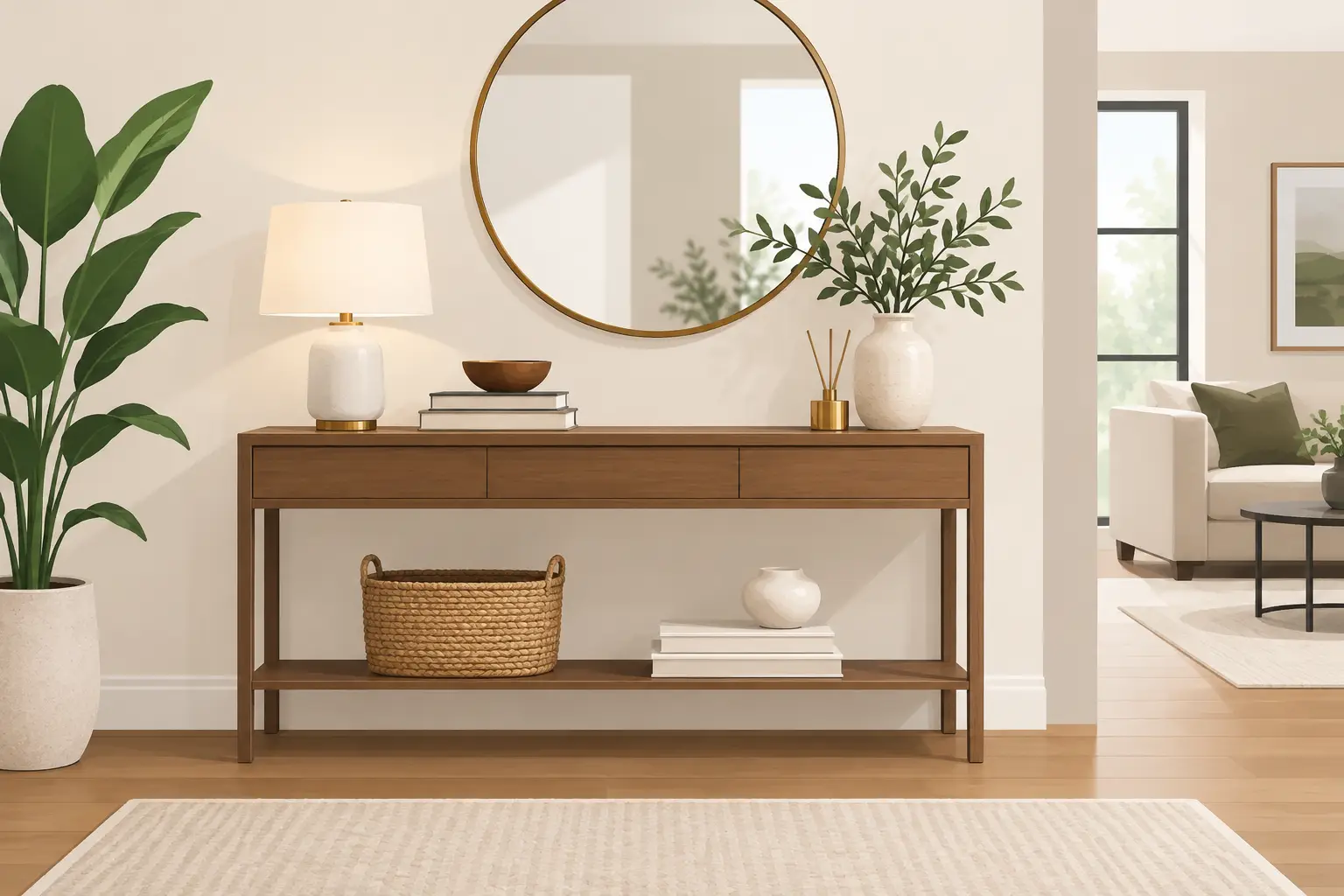
A console table can make a narrow entry feel intentional before anyone has taken off their coat. It can also become the place where mail, keys, charging cords, and miscellaneous clutter quietly accumulate. Learning how to style console tables is less about filling a surface with decorative objects and more about giving that hardworking piece a clear purpose, a sense of proportion, and a finish that reflects the rest of your home.
The best arrangements feel collected rather than crowded. They pair useful pieces with elevated accents, leave enough breathing room for the table itself to show, and bring a little sophistication to spaces that are often overlooked.
Start With the Table’s Job
Before choosing a vase or lighting a candle, consider where the console lives and what it needs to do. An entryway console should welcome guests while handling everyday essentials. A sofa table can visually anchor a seating arrangement and provide a soft glow after dark. In a hallway, a narrow console may be primarily decorative, giving a long passage more rhythm and character.
This first decision prevents a common styling mistake: treating every console table exactly the same. A beautiful arrangement that leaves no place for keys is frustrating by the front door. Likewise, a heavily functional setup can feel too busy behind a streamlined sofa.
If the surface needs to work hard, reserve one discreet area for daily use. A polished tray can hold keys, sunglasses, and earbuds without making the entire table look like a landing zone. Drawers, baskets, and lidded boxes are equally useful when you want practical storage to disappear into the overall design.
How to Style Console Tables With Balanced Layers
A console table looks most considered when it has a focal point, varied heights, and a few grounded details. Think of the arrangement as a composition rather than a collection of individual purchases. Each element should contribute scale, texture, function, or visual interest.
Choose One Anchor Above the Table
The wall above a console is your opportunity to create a strong focal point. A substantial mirror is a classic choice in an entry because it reflects light, gives guests a final check before leaving, and makes compact spaces feel more open. For a more tailored look, choose framed artwork with enough presence to hold its own against the width of the table.
As a general guide, an anchor piece should be roughly two-thirds to three-quarters the width of the console. It does not need to match the table exactly, but it should feel visually connected. A small frame over a long console tends to look tentative, while an oversized piece can overwhelm a delicate table silhouette.
Hang artwork or a mirror low enough that it feels related to the furniture beneath it. Leaving a modest gap creates a cohesive vertical arrangement instead of two disconnected elements competing for attention.
Build Height Without Making It Symmetrical
Once the anchor is in place, add height on the tabletop. A table lamp, sculptural vase, branches, or a tall candleholder can provide the vertical line that makes the display feel finished. You do not need matching lamps on every console. In fact, a single lamp paired with a shorter object often feels more relaxed and more personal.
Aim for visual balance rather than strict symmetry. If a lamp sits on one end, balance it on the other with a stack of oversized books and a low vessel, or a sculptural object with a little weight. The pieces do not have to be identical to feel harmonious.
Be mindful of shade size and lamp height. A lamp that is too tall can block artwork or dominate an entryway sightline. One that is too small may disappear. The right lamp adds ambient light and a sense of permanence, especially on richer materials such as wood, stone, metal, or lacquer.
Add a Middle Layer for Depth
The middle layer is where a console begins to feel curated. This might be a small framed photograph, a pair of elegant candleholders, a ceramic bowl, or a design book placed beneath a distinctive object. These accents bridge the gap between a tall lamp or vase and the flat tabletop.
Limit yourself to a few pieces with clear contrast. Combine matte ceramic with gleaming brass, natural stone with warm wood, or a smooth glass vase with woven texture. The variety gives a premium arrangement depth, but too many finishes at once can make even high-end accessories look accidental.
A restrained color palette is usually the easiest route to a polished result. Pull two or three tones from nearby furniture, art, or textiles. Cream, black, walnut, soft gray, olive, and brushed metal are versatile foundations, while a single saturated color can provide a confident focal point.
Use the Lower Shelf and Floor Space Well
If your console has a lower shelf, treat it as part of the composition, not an afterthought. Large-format books, a pair of storage baskets, or a few low ceramic vessels can add useful weight near the floor. This is particularly effective for open-base tables, which can otherwise appear visually light in a large room.
Baskets work best when they have a real purpose. Use them for dog leashes near the entry, extra throws in a living room, or seasonal accessories in a hallway. Choose materials that complement the table rather than compete with it. Woven fibers soften metal and glass, while leather or structured fabric bins suit more tailored interiors.
A single ottoman or stool tucked beneath a console is another refined option, provided there is enough clearance to keep the arrangement comfortable. It adds texture and an occasional seat without taking up additional square footage. In small spaces, that mix of flexibility and style is especially valuable.
Let the Room Set the Style Direction
Console styling should echo the larger room, even when the table is a statement piece. A sleek black console with sculptural lighting and monochrome art suits a modern apartment. A warm wood table layered with linen-shaded lamps, old books, and organic pottery can soften a more traditional home. For a coastal or relaxed contemporary space, pale woods, woven baskets, and glass accents create an easy, light-filled effect.
There is room for contrast, but it should feel deliberate. A contemporary metal table can look exceptional against classic millwork when paired with art that ties the two together. Similarly, an antique-inspired mirror can bring depth to a clean-lined console. The goal is not to make every item match. It is to give the mix a common thread, whether that is color, material, or mood.
Seasonal updates can be subtle. A branch with fresh greenery in spring, a textured bowl of natural accents in fall, or a richer candle scent in winter can refresh the area without requiring a complete restyle. Avoid turning the console into a themed display. Sophistication tends to come from restraint.
Keep Everyday Clutter From Undoing the Look
A styled console remains beautiful only if it supports the way you live. Build in a few boundaries from the beginning. Use a tray for small essentials, choose a catchall bowl for loose items, and keep mail contained in a drawer or closed box. If your family needs a charging station, select one compact solution and place it where cords can be hidden.
Then edit regularly. One of the most effective styling moves costs nothing: remove the items that no longer belong. A console should not become a permanent holding area for packages, school papers, or things waiting to be put away.
Premium design is rarely about owning more accessories. It is about choosing fewer pieces with stronger form, quality materials, and a role in the room. Whether your taste leans tailored, organic, modern, or eclectic, let your console table offer a composed first impression – and leave just enough space for real life to happen.









Leave a comment