How to Organize Under Sink Storage Beautifully
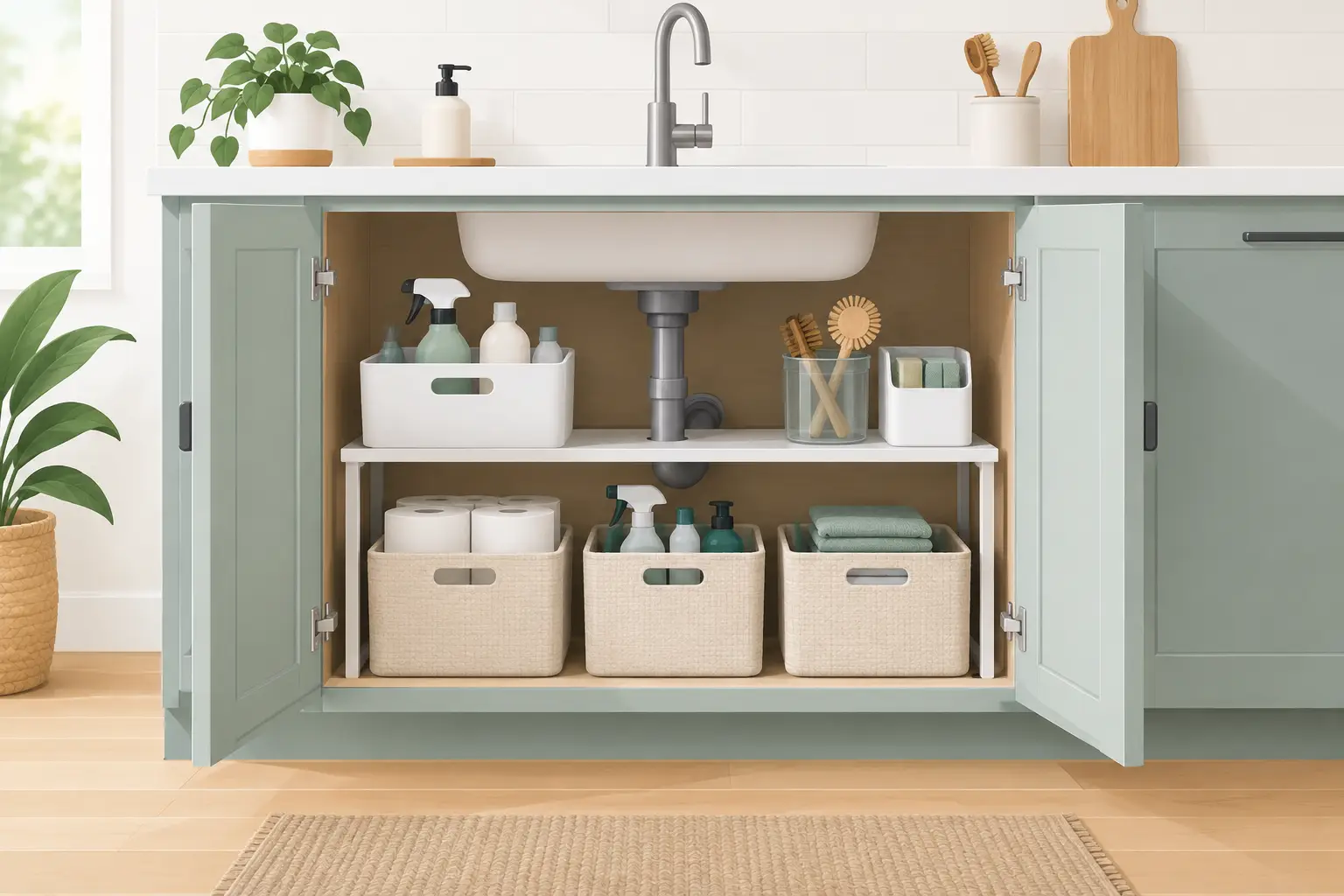
A beautiful vanity, a polished kitchen faucet, and a countertop free of visual noise can still be undermined by one overlooked space: the cabinet below the sink. Learning how to organize under sink storage gives everyday essentials a proper place while making cleaning, cooking, and getting ready feel noticeably more composed.
The goal is not to fill every inch with organizers. It is to create a clean, accessible system that works around plumbing, contains inevitable drips, and suits the way your household actually uses the space. A premium result comes from restraint, durable materials, and a layout that stays tidy after a busy week.
Start With an Empty Cabinet and a Clear Purpose
Take everything out before buying a single bin. This is the moment to discard dried-out sponges, duplicate cleaners, nearly empty bottles, and products that do not belong near a sink. Wipe the cabinet interior thoroughly, then check for moisture, warped surfaces, or a slow leak around the pipes. Organization is far more effective when the cabinet itself is clean, dry, and protected.
Next, decide what this particular cabinet needs to do. A kitchen sink cabinet may need room for dish soap, dishwasher pods, food-storage bags, and a trash-bin accessory. A bathroom vanity might need daily skincare, hair tools, spare hand soap, and cleaning supplies. Trying to make one cabinet store every household extra usually creates the clutter you are trying to avoid.
Measure the cabinet’s width, depth, and usable height, then measure the pipe configuration. Include the space lost to shutoff valves and disposal units. These dimensions determine whether pull-out drawers, low-profile bins, or a simple caddy will give you the best return on space.
How to Organize Under Sink Storage Around Plumbing
Pipes make under-sink cabinets awkward, but they do not make them unusable. Treat the central plumbing area as a boundary rather than wasted space. The zones on either side and in front of the pipes are usually ideal for the products you reach for most.
A two-tier organizer can be excellent in a wide cabinet with plumbing that sits farther back. Look for a design with a removable or adjustable upper shelf so the unit accommodates pipework instead of forcing products into a cramped arrangement. If your pipes are low, unusually wide, or offset, separate narrow bins often work better than a single large organizer. They can slide out independently and leave the center clear for maintenance.
Avoid placing heavy bottles directly behind plumbing where they are difficult to retrieve. Reserve that area for backstock items in a labeled, leakproof bin, or leave it open entirely. Easy access is a form of luxury: when every item can be found and returned without moving five others, the system feels effortless.
Choose Materials That Belong Near Water
Under-sink storage should be attractive, but it also needs to withstand splashes and humidity. Clear acrylic, coated metal, sturdy plastic, and washable woven-look bins are practical choices. Natural fiber baskets can look refined, though they are better suited to dry bathroom supplies than to a kitchen cabinet where a leak could go unnoticed.
Place a waterproof cabinet liner or shallow drip tray across the base before arranging products. It protects finished cabinetry and makes small spills easier to spot. For an especially polished look, choose a liner in a quiet neutral shade that complements the cabinet interior rather than competing with it.
Build Zones for Daily Use, Cleaning, and Backstock
The most useful systems separate products by frequency, not simply by category. Your daily-use zone should be closest to the cabinet door. In the kitchen, that may include dish soap, hand soap refills, a sponge holder, and dishwasher tablets. In the bathroom, place face wash, contact lens solution, or your everyday styling products within immediate reach.
Create a second zone for weekly cleaning. Group sprays, microfiber cloths, gloves, and scrubbers in one handled caddy that can be lifted out when it is time to clean. A portable caddy is especially useful in apartments and smaller homes, where one set of supplies may serve several rooms.
The final zone is for backstock. Store unopened refills, extra sponges, and replacement trash bags in a contained bin toward the rear or side of the cabinet. Keep the quantity disciplined. Two refills may be sensible; six bottles of the same cleaner turn valuable storage into a supply closet.
If several people use the space, labels make the system easier to maintain. They do not need to be decorative or excessive. A simple label such as “refills,” “dishwasher,” or “bath cleaning” prevents well-meaning family members from dropping items wherever there is an opening.
Use the Cabinet Door With Care
The inside of the cabinet door is valuable real estate, especially in compact kitchens and bathrooms. Slim adhesive bins or mounted racks can hold small, lightweight items such as sponges, gloves, brushes, or cleaning cloths. A hanging holder can also keep a hair dryer cord or dish brush from tangling with everything below.
There is one trade-off: door storage can interfere with shelves, pull-out bins, or the plumbing when the door closes. Test placement with painter’s tape before permanently mounting anything. Avoid storing large bottles on the door, which can put stress on hinges and make the cabinet feel unbalanced.
For renters, removable adhesive options offer flexibility. Homeowners who want a more tailored installation may prefer a securely mounted organizer, provided it does not compromise the cabinet finish or access to plumbing.
Refine the Kitchen Sink Cabinet
Kitchen cabinets collect the most awkward mix of shapes: tall spray bottles, soft boxes of bags, rolls of trash liners, and small scrubbers. A few purposeful choices bring order quickly.
Store cleaning sprays upright in a pull-out caddy so labels stay visible. Keep dishwasher pods in their original child-resistant container unless you have a clearly labeled, secure alternative. Use a vertical divider for food-storage bags and foil if the cabinet is broad enough, but do not force paper goods into a damp area if your plumbing has a history of condensation.
A tension rod can be useful for hanging spray-bottle triggers, freeing up the cabinet floor. It works best for a modest number of lightweight bottles and should never block shutoff valves. If it slips or bows under weight, replace it with a sturdier solution rather than accepting a daily annoyance.
Refine the Bathroom Vanity
Bathroom under-sink storage benefits from a calmer, more edited approach. The cabinet should support your routine, not become a catchall for every toiletry purchase. Keep daily products forward, reserve a dedicated small bin for travel-size items, and move infrequently used tools elsewhere if they crowd the space.
Heat styling tools require extra consideration. Never store one until it has fully cooled, and use a heat-resistant holder only where there is enough ventilation and clearance from cleaning products. For cosmetics and skincare, clear low-profile drawers make it easier to see what you own, which helps reduce unnecessary duplicates.
If you share a bathroom, assign each person a bin or drawer. This creates a discreet personal zone without making the vanity look overfilled. Matching containers in clear, white, charcoal, or a warm neutral finish can make even a modest cabinet feel intentionally designed.
Keep the System Looking Considered
An under-sink system does not need constant attention, but it does need a brief reset. Once a month, wipe the liner, check for leaks, and return misplaced items to their zones. Refill the daily-use products before they run out, then remove empty containers immediately.
Resist the urge to add an organizer every time the cabinet feels crowded. Crowding often means there are too many items, the wrong items are stored there, or the layout is not aligned with how you use the space. Editing is often more valuable than another container.
The right under-sink setup is quiet and hardworking. It protects the cabinet, makes a small task easier, and keeps the details of your home as considered as the rooms guests see. When you open the door and find exactly what you need, that is sophistication delivered in one of the most practical places in the house.












Leave a comment