Pellet Grill Versus Charcoal Grill Compared
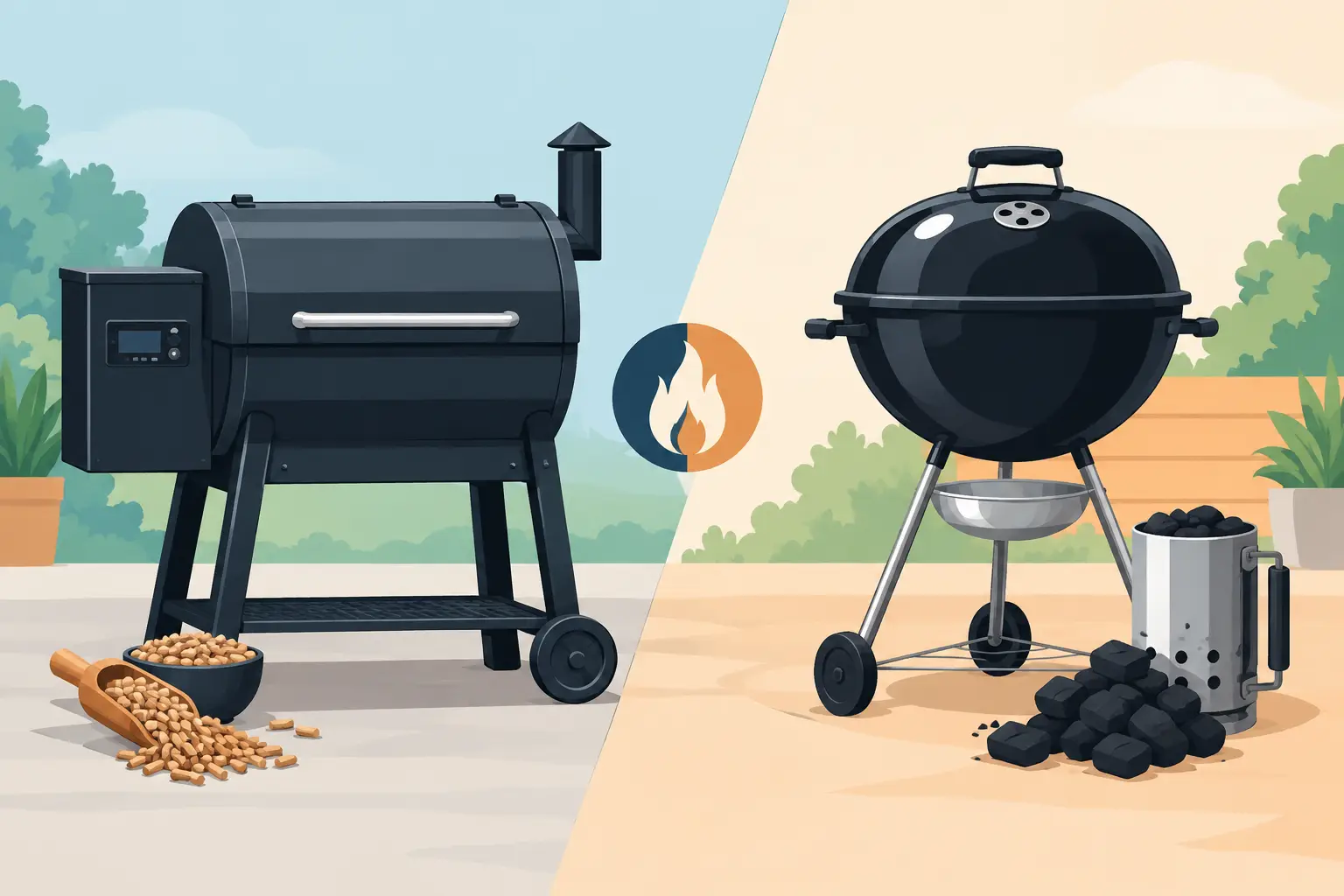
A pellet grill versus charcoal grill decision changes more than the way dinner tastes. It shapes how you host, how much attention you give the fire, and whether your patio feels like a relaxed extension of the home or a hands-on live-fire cooking station. Both can produce exceptional food, but they reward very different kinds of grillers.
For design-conscious homeowners, the right choice is rarely about declaring one grill universally better. It is about choosing the cooking experience that fits your weekends, your menu, and the level of ritual you want from outdoor entertaining.
Pellet Grill Versus Charcoal Grill: The Essential Difference
A pellet grill runs on compact hardwood pellets fed from a hopper into a fire pot. An electric controller regulates airflow and pellet delivery to hold a selected temperature, much like an outdoor oven with real wood smoke in the mix. Set the temperature, place the food on the grates, and let the grill do much of the monitoring.
A charcoal grill runs on briquettes or lump charcoal, with oxygen and fuel placement determining the heat. You build the fire, manage the vents, and adjust the cooking zones as the coals evolve. It is more tactile, more variable, and for many people, more satisfying.
That distinction matters most when time is limited. A pellet model is made for a brisket that cooks steadily while you prepare the table, welcome guests, or handle the rest of the meal. A charcoal grill asks you to stay close enough to read the fire. In return, it offers the direct heat and live-fire character that many grilling purists will not trade away.
Flavor: Smoke Precision or Fire-Kissed Intensity?
Charcoal has a deserved reputation for bold grilled flavor. When fat drips onto hot coals, it vaporizes and rises back toward the food, creating the savory, lightly charred profile associated with classic burgers, steaks, and chicken. Lump charcoal can bring a cleaner, more natural wood-fire note, while briquettes provide a dependable, longer-burning bed of heat.
Pellet grills create authentic wood smoke, and the flavor can be refined rather than aggressive. Different pellet blends let you tailor the character of the cook: mild fruitwood for salmon, a balanced hardwood blend for chicken, or a deeper hickory-style profile for ribs. This makes a pellet grill especially appealing for low-and-slow cooking, where a controlled stream of smoke has time to build complexity without overwhelming the meat.
For hard searing, charcoal usually has the advantage. A well-built charcoal fire can produce intense radiant heat and a dramatic crust on a steak. Some pellet grills include direct-flame or high-heat features, but many top out at temperatures better suited to roasting, baking, smoking, and moderate grilling. If your signature meal is a reverse-seared ribeye with a serious crust, charcoal remains the more natural fit.
Ease of Use and Temperature Control
This is where premium pellet grills earn their place in a modern outdoor kitchen. Digital controls make it easy to choose a temperature and maintain it over hours, without repeated vent adjustments or fuel checks. That consistency is valuable for larger cuts, holiday meals, and entertaining days when the host would rather be present than tied to the grill.
Pellet grills also tend to be more forgiving for beginners. There is still a learning curve around airflow, pellet quality, and cook timing, but the equipment removes much of the unpredictability. For someone upgrading a patio setup and wanting restaurant-worthy ribs, smoked turkey, or wood-fired pizza without a steep technical learning curve, that ease is a genuine luxury.
Charcoal rewards attention instead of automation. Temperature management depends on arranging the coals, opening or closing vents, and understanding how weather affects the fire. Wind, cold temperatures, and the amount of lit charcoal can change the cook quickly. Once learned, those variables become part of the appeal. You are not merely operating an appliance. You are cooking over a living fire.
Neither approach is inherently more serious. Pellet grilling prioritizes consistency and freedom. Charcoal grilling prioritizes control by hand and direct connection to the cooking process.
Startup, Cleanup, and Everyday Practicality
A pellet grill typically starts with the push of a button, then takes roughly 10 to 15 minutes to reach cooking temperature. It requires an electrical outlet, so placement matters. On a polished patio, plan for safe access to power and give the grill adequate clearance from walls, furniture, and overhead structures.
Charcoal requires more preparation. A chimney starter simplifies the process and avoids the chemical smell of lighter fluid, but lighting coals still takes time. Depending on the charcoal and weather, expect about 15 to 25 minutes before the grill is ready. For spontaneous weeknight cooking, that difference can be decisive.
Cleanup is a trade-off. Pellet grills produce fine ash that should be vacuumed from the fire pot and interior periodically. Grease management also deserves attention, particularly after rich cuts such as pork shoulder or burgers. Charcoal leaves more visible ash, and disposing of coals safely requires patience. Ash must be fully cold before it goes into a metal container.
Storage is another practical consideration. Pellets need to stay dry. Humidity can cause them to swell and break down, which affects performance. Charcoal is also best kept dry, but it is less sensitive to moisture than pellets. If your outdoor space has limited covered storage, factor in a weather-resistant container for either fuel source.
Cost and Long-Term Value
Entry-level charcoal grills are often less expensive than pellet grills, and the fuel is widely available. A simple kettle-style charcoal grill can deliver outstanding results at a modest price, especially for cooks who value direct grilling over all-day smoking.
Pellet grills generally cost more upfront because they include an auger, fan, igniter, temperature controller, and electrical components. Higher-end models may add insulated construction, larger hoppers, more precise controls, and thoughtful details that make outdoor cooking feel more considered. For frequent use, those features can justify the investment through convenience and versatility.
Fuel costs vary by region and cooking style. Long smoking sessions use a meaningful amount of pellets, while high-heat charcoal grilling can burn through a substantial load of fuel. The more useful question is not which fuel is cheapest per bag. It is which grill you will use often enough to make the purchase feel worthwhile.
A beautiful grill that suits your habits becomes part of the home. One that demands more involvement than you can realistically give it may sit covered in the corner, regardless of its specifications.
Which Grill Fits Your Outdoor Lifestyle?
Choose a pellet grill if you want a versatile, low-stress centerpiece for weekend gatherings. It is ideal for cooks who love smoked ribs, pulled pork, whole chicken, salmon, baked sides, and slow-roasted meals, but do not want to supervise a fire for hours. It also fits professionals and busy families who want high-end results with a more streamlined routine.
Choose charcoal if fire management is part of the pleasure. It is especially well suited to steak nights, crisp-skinned chicken, burgers, kebabs, and any meal where aggressive direct heat matters. Charcoal makes sense for cooks who enjoy learning the nuances of vent control, two-zone setups, and different fuel types.
Space can influence the choice, too. A compact charcoal grill is easy to fit on a smaller patio, though local building rules and lease agreements may restrict charcoal use on balconies or in multi-unit residences. Pellet grills are often larger and require power, but their clean-lined designs can create a more substantial outdoor-kitchen presence.
A Premium Setup Is About More Than the Grill
The best grilling experience comes from matching the cooker with a setting that invites people to linger. Create a practical prep surface nearby, use outdoor lighting that makes evening cooking comfortable, and choose durable seating that keeps guests close without crowding the cook. A quality thermometer, a covered storage solution, and properly sized grill tools add more value than a drawer full of novelty accessories.
If you choose charcoal, invest time in a chimney starter and a dependable instant-read thermometer. If you choose pellets, keep a dry supply on hand and clean the fire pot on schedule. Small habits protect performance and keep every cook feeling composed rather than improvised.
The most memorable outdoor meals rarely come from chasing the most complicated equipment. Choose the grill that makes you want to light it on an ordinary Wednesday, then give it a place in your home worthy of the meals and gatherings it will create.













Leave a comment