Best Furniture for Small Apartments That Works
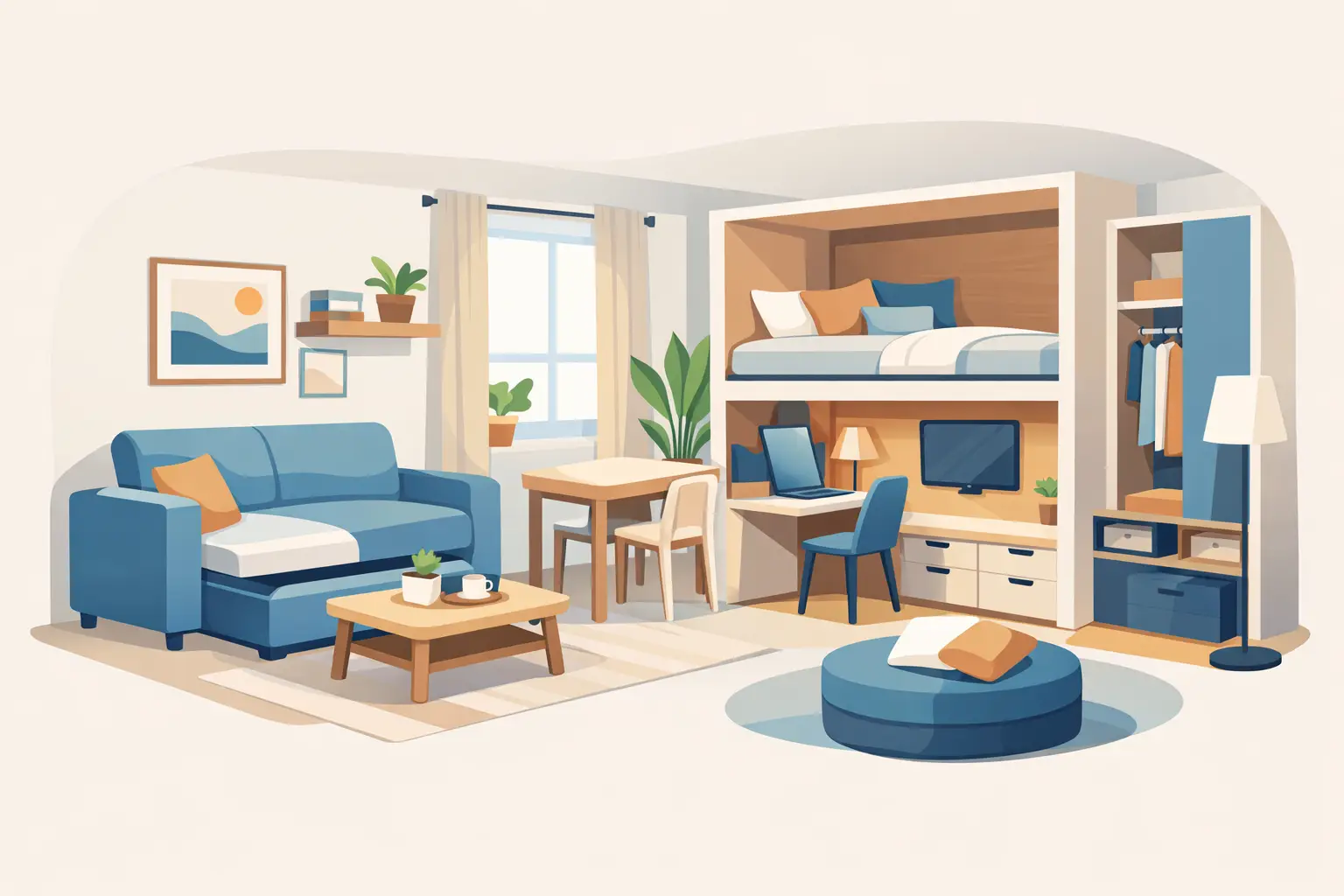
A small apartment asks more of every square foot. The coffee table has to welcome guests without blocking the path to the kitchen. The bed may need to conceal a season’s worth of linens. And the best furniture for small apartments should never make a home feel temporary, crowded, or compromised.
The answer is not to furnish less at any cost. It is to choose better: pieces with considered proportions, more than one purpose, and enough visual refinement to make a compact home feel intentional. A beautifully edited apartment can feel generous, comfortable, and distinctly yours.
What Makes Furniture Right for a Small Apartment?
Square footage matters, but circulation matters more. Before selecting a sofa or dining table, notice how you move through the room: where the entry opens, which doors need clearance, and where daylight lands. A piece can fit on paper and still make daily life feel awkward if it interrupts that rhythm.
Scale is the first filter. Look for furniture with a narrow depth, raised legs, slim arms, or an open base. These details expose more floor and create visual breathing room. A low, bulky sectional may offer extra seating, for example, but it can overwhelm a studio living area. A tailored apartment-size sofa with clean lines often delivers a more polished result while preserving valuable walking space.
Function is the second filter. In a compact home, furniture should earn its footprint. Storage, extension leaves, nesting forms, and convertible designs are worth prioritizing when they genuinely support your routine. A feature is only valuable if you will use it. Buying a complex transforming table for occasional guests may not be as useful as choosing a refined console that serves as a desk every weekday.
Finally, choose pieces that belong together visually. Small rooms reveal every decision. Repeating a finish, fabric family, or metal tone gives the space a calm, curated character, even when the furnishings serve very different purposes.
The Best Furniture for Small Apartments, Room by Room
Start with an apartment-scale sofa
The living room usually carries the greatest demand: relaxing, working, entertaining, and sometimes sleeping. An apartment-scale sofa is the anchor. Favor models with a defined silhouette, supportive cushions, and an overall depth that leaves room to pass comfortably in front of it. Sofas with exposed legs or a visually light base are especially effective because they avoid turning the room into one solid block.
A sleeper sofa is a thoughtful choice for frequent overnight guests, but there is a trade-off. Sleeper mechanisms add weight and can affect seat comfort, so test the seating dimensions and mattress arrangement carefully. If guests stay only once or twice a year, a premium sofa paired with an elegant foldable guest mattress may be the more satisfying everyday investment.
Instead of adding matching chairs by default, consider one sculptural accent chair or a pair of compact swivel chairs. They can be repositioned for conversation and tucked into a corner when the room needs to feel more open.
Choose a coffee table that does more
A coffee table should suit the way you actually live. Lift-top designs can create a convenient laptop surface, while storage ottomans offer a softer alternative with hidden room for throws, remotes, or games. If your living room becomes a workout zone or entertaining space, nesting tables provide welcome flexibility: pull them apart when needed, then slide them back into one concise silhouette.
Glass and acrylic tables can visually recede, which is useful in a darker room. Wood, stone-look, or upholstered pieces bring more warmth and presence. Neither is automatically better. The strongest choice balances the room’s need for visual lightness with its need for texture and durability.
Make the dining table adaptable
A dedicated dining room is rare in many apartments, but a proper place to eat, host, or work still changes how a home feels. Round pedestal tables are exceptional in tight layouts because there are no corner legs to navigate around, and their curved edge softens the room. A diameter of 36 to 42 inches often seats two to four comfortably without dominating the space.
For a narrow dining zone, consider a drop-leaf or extension table with a high-quality finish. Keep it compact for daily meals, then open it for a dinner party. Avoid choosing an oversized table solely for the occasional holiday gathering. Your home should serve the other 360 days of the year beautifully.
Dining chairs deserve the same attention. Armless chairs slide in closer, while upholstered options make a small table feel more luxurious. If storage is limited, select chairs that stack elegantly or can double as occasional seating in the living room.
Let the bed carry the storage load
The bedroom becomes calmer when storage is integrated rather than added as an afterthought. A platform bed with built-in drawers can replace a separate dresser in a compact room, especially if closet space is limited. An upholstered storage bed with a lift-up base creates a discreet home for bulky bedding, luggage, and off-season clothing.
Measure more than the mattress. Account for the drawers opening, bedside access, and the route from the door to the bed. In a truly tight bedroom, a queen bed may be the right choice even if a king technically fits. The extra clearance can make the room feel noticeably more restful.
Wall-mounted nightstands, slim bedside tables with drawers, or small floating shelves can offer a place for essentials without consuming the floor. Keep the surface edited: a lamp, a book, and one personal object are often enough.
Use vertical storage with intention
Tall bookcases, closed-door cabinets, and wall-mounted shelving make use of the space that is often overlooked. The goal is not to fill every wall. It is to move necessary storage upward while keeping the lower portion of the room easy to navigate.
Closed storage is especially useful for visual calm. Open shelves can be striking, but they require consistent styling and frequent editing. If your shelves hold paperwork, cords, pet supplies, and everyday miscellany, a streamlined cabinet will look more considered and ask less of you.
A narrow console behind a sofa or along an entry wall can also become a small-apartment essential. It provides a landing place for keys, a table lamp, and a few meaningful decorative objects while creating welcome definition between living zones.
Design Details That Make a Compact Home Feel Larger
Furniture placement has as much influence as furniture selection. Pulling a sofa a few inches away from the wall can create depth, provided the room allows it. Using one larger area rug rather than several small rugs can make a living space read as a single, more expansive zone. A rug should generally extend beneath the front legs of the sofa and chairs so the arrangement feels connected.
Legs, finishes, and upholstery affect perceived scale. Lighter woods, warm neutrals, soft boucle, and tailored performance fabrics bring an elevated look without making a room feel heavy. Dark finishes can be equally sophisticated, particularly when balanced by reflective surfaces, pale walls, or generous natural light.
Mirrors deserve a practical mention. Positioned to reflect a window, they can amplify daylight and give a small room more depth. But use them as a deliberate design element, not a cure for poor layout. No mirror can compensate for furniture that is too large for the room.
Lighting adds another layer of comfort without taking up much room. Wall sconces, slim floor lamps, and table lamps on consoles create a welcoming glow while freeing surfaces from oversized fixtures. In a small apartment, layered lighting is often the difference between a room that feels merely functional and one that feels finished.
Avoid the Common Small-Space Mistakes
The most common mistake is buying furniture in isolation. A beautiful chair can still be the wrong chair if it blocks a drawer, competes with the sofa, or leaves no room for a side table. Create a simple floor plan and mark the furniture dimensions before ordering. Painter’s tape on the floor is an easy way to see the real footprint.
Another mistake is assuming every piece must be tiny. A room filled with undersized furniture can feel scattered and less comfortable than a room with a few substantial, well-proportioned pieces. One quality sofa, a versatile table, and thoughtfully chosen storage will usually look more luxurious than a crowded collection of small furniture.
Be selective with multipurpose designs, too. A desk that folds into a wall may be ideal for a studio used as both home and office. In an apartment with a separate work nook, however, a slim writing desk with drawers can offer more comfort and a stronger visual presence. The right solution depends on how your space supports your life, not on how many features a product promises.
At Viridin, a curated approach makes that decision easier: choose furnishings for their craftsmanship, proportion, and lasting versatility, not simply because they claim to save space. The most successful small apartments feel collected over time, with each piece contributing both utility and distinction.
A compact home does not need to imitate a larger one. Give each area a clear purpose, invest in furniture that performs with elegance, and leave enough open space for your home to feel like a place you can fully exhale.









Leave a comment