What Size Generator Do I Need for My Home?
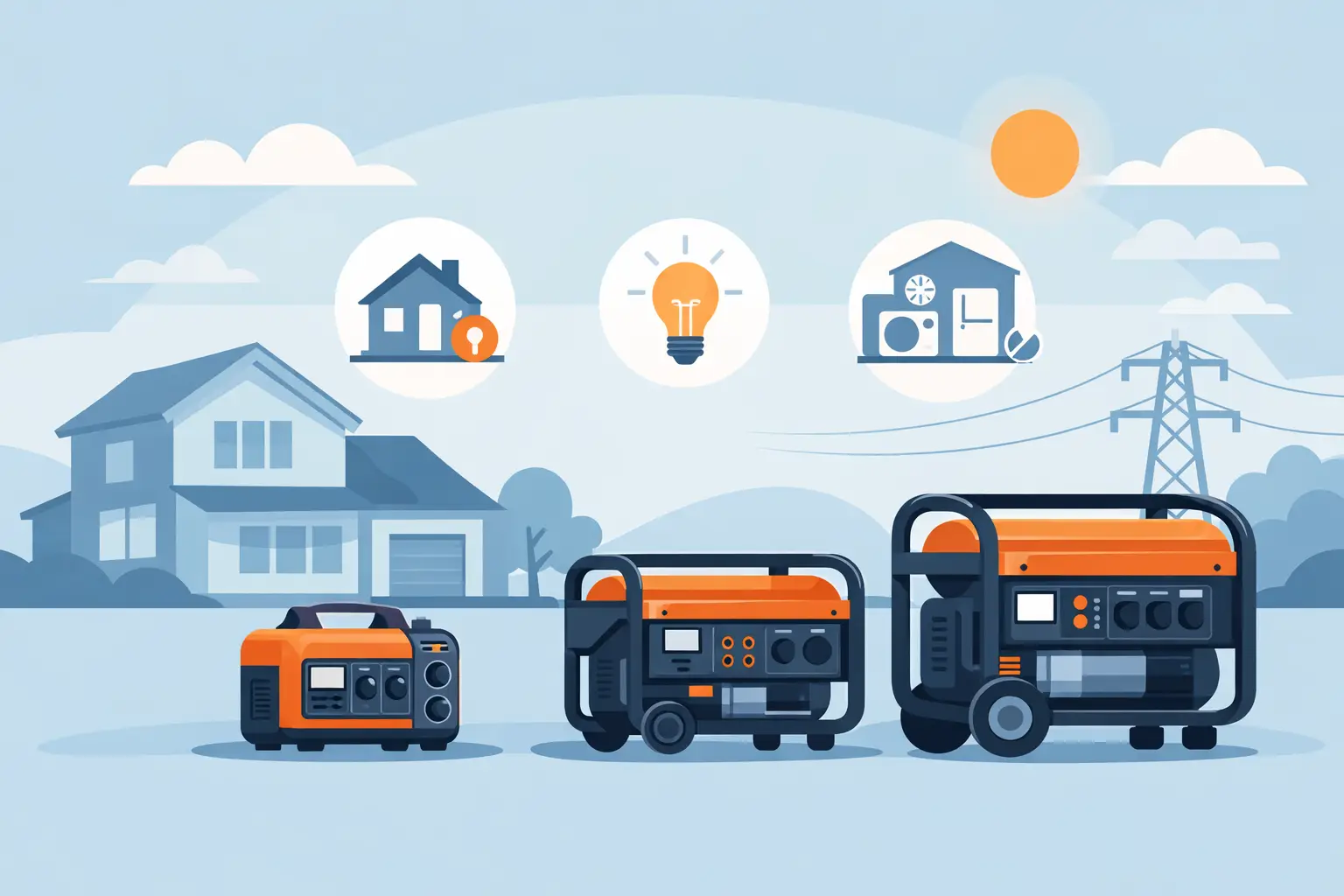
A power outage quickly reveals which comforts are truly essential: a refrigerator protecting groceries, lights in the kitchen, a charged phone, a working sump pump, or cooling on a humid summer evening. If you are asking, “what size generator do I need,” the answer is not simply the largest model your space or budget allows. It is the generator that supports your priorities with enough reserve power to start demanding appliances safely.
The right choice begins with a realistic look at how you live. A compact inverter generator can make a weekend getaway or short outage far more comfortable. A larger portable unit can keep key home systems running. A whole-home standby generator is designed for a more polished, uninterrupted experience when power loss is not an inconvenience you want to manage.
What Size Generator Do I Need? Calculate Your Load
Generator capacity is measured in watts. To choose well, separate two numbers: running watts and starting watts.
Running watts are the steady amount of power an appliance needs while operating. Starting watts, also called surge watts, are the temporary extra power needed when a motor starts. Refrigerators, freezers, sump pumps, air conditioners, and many power tools can draw a significantly higher surge at startup than during normal operation.
Start by making a list of the appliances and systems you genuinely plan to run at the same time. Add their running watts, then add the highest starting-watt requirement among the motor-driven items that may start while the generator is already carrying a load. Finally, give yourself a 20% to 30% cushion. That reserve helps the generator operate more comfortably, leaves room for an unexpected need, and avoids a setup that feels strained every time the refrigerator cycles on.
A generator should not be selected by adding the wattage printed on every device in the house. Few households need every television, countertop appliance, bedroom light, and HVAC component operating during an outage. Prioritizing essential circuits is often the more elegant and cost-conscious approach.
A quick wattage planning example
The exact draw varies by model, so always check appliance labels, owner’s manuals, or manufacturer specifications. Still, these typical ranges provide a useful starting point.
| Household need | Typical running watts | Typical starting watts | | — | —: | —: | | Refrigerator | 600-800 | 1,200-2,000 | | Sump pump | 800-1,100 | 1,500-2,200 | | Window air conditioner | 900-1,500 | 1,500-2,500 | | Gas furnace blower | 400-800 | 1,200-2,350 | | Microwave | 1,000-1,500 | Same as running watts | | Internet modem and router | 20-50 | Same as running watts | | LED lighting for several rooms | 100-300 | Same as running watts |
Imagine you want to power a refrigerator, sump pump, internet equipment, selected lights, a microwave used occasionally, and a gas furnace blower. The combined running load might land around 3,000 to 4,000 watts, depending on your equipment. Because the pump, refrigerator, and blower can demand extra power when they start, a 5,000- to 7,500-watt generator is often a more comfortable range than a unit sized exactly to the running total.
Match Generator Size to the Way You Use Power
A generator’s wattage matters, but the experience you want matters just as much. The best size for a city apartment emergency kit is not the best size for a suburban home with a finished basement and a sump pump.
For essentials during short outages: 2,000 to 3,000 watts
This range is well suited to restrained, thoughtful use. It can typically support refrigeration, a few lights, device charging, internet equipment, and perhaps a small fan or television. Many premium inverter generators in this category are quieter, more fuel-efficient at lighter loads, and easier to move than larger conventional units.
They are an excellent choice for apartments where outdoor use is permitted and properly distanced, compact homes, tailgating, camping, or as a supplemental power source. The trade-off is clear: you will need to manage larger appliances deliberately. Running a microwave, portable heater, or window AC alongside other loads may require turning something else off first.
For essential home circuits: 4,000 to 7,500 watts
For many homeowners, this is the practical sweet spot. It can cover the refrigerator and freezer, lighting, Wi-Fi, television, a furnace blower, sump pump, garage door opener, and selected kitchen appliances. It may also support a modest window air conditioner, though not necessarily every major appliance at once.
A unit in this range offers more flexibility without moving into whole-home territory. If your goal is to protect food, maintain basic comfort, and keep the home functioning during a storm, it often delivers the best balance of capability, footprint, and investment.
For larger homes and high-demand needs: 8,000 to 12,000 watts
Larger portable generators are appropriate when you have several critical loads, such as a well pump, larger sump pump, multiple refrigerators, a furnace, and limited cooling. They can also suit households that want to operate more kitchen equipment or a central air system, provided the generator and electrical setup are properly specified.
This category requires more planning. Larger units use more fuel, produce more sound, and are less convenient to relocate. They can be an excellent fit, but capacity should support a real need rather than become an expensive substitute for a clear power plan.
For whole-home continuity: 14,000 watts and above
A permanently installed standby generator, typically paired with an automatic transfer switch, is designed for homes where power continuity is a priority. Depending on the home’s electrical load, these systems can support central air conditioning, well pumps, kitchen appliances, lighting, and more with minimal interruption.
Whole-home sizing is not a guessing game. An electrician or generator professional should conduct a load calculation that accounts for HVAC starting demand, electric water heating, ranges, dryers, pool equipment, and the service panel. Some homes need load management rather than a dramatically oversized generator. That approach can deliver a refined backup-power experience while controlling equipment and installation costs.
Do Not Overlook Starting Watts and Voltage
A generator with sufficient running watts can still stumble if it cannot handle motor startup. This is one reason a 4,000-watt generator is not automatically right for a 4,000-watt load. If the refrigerator compressor and sump pump start close together, the brief surge may exceed the generator’s peak capacity.
Pay attention to voltage as well. Small generators generally provide 120-volt outlets, which are ideal for most household essentials. Larger portable models may include a 120/240-volt outlet for connection to a transfer switch or for equipment that requires 240 volts, such as certain well pumps and central HVAC components. A 240-volt appliance cannot run from a 120-volt-only generator, regardless of the generator’s total wattage.
For sensitive electronics, an inverter generator or a model with low total harmonic distortion can be a thoughtful upgrade. Clean, stable power helps protect laptops, televisions, networking equipment, and modern appliances with sophisticated control boards.
Plan the Connection Before You Buy
The safest generator is not plugged into the home through an improvised cord arrangement. Never connect a generator directly to a wall outlet. This dangerous practice, known as backfeeding, can injure utility workers, damage equipment, and create a serious fire risk.
For selected circuits, have a qualified electrician install a transfer switch or interlock kit that is compatible with your electrical panel and local code. This lets you power chosen circuits properly while isolating the house from the utility grid. It also turns a stressful outage into a simpler routine: roll out the generator, connect the designated inlet, start the unit, and manage the chosen circuits.
Extension cords can work for temporary, limited use, but use outdoor-rated cords with the correct wire gauge and length. Longer, thinner cords can cause voltage drop and reduce performance. Keep the generator outdoors, well away from doors, windows, vents, and attached garages. Carbon monoxide is odorless and can be deadly, so working carbon monoxide alarms inside the home are non-negotiable.
Think About Fuel, Runtime, and Everyday Refinement
Generator capacity is only part of outage readiness. A larger fuel tank may provide longer runtime, but fuel consumption rises sharply as the load increases. Review runtime at 25%, 50%, and full load rather than focusing only on tank size. For overnight use, quiet operation and long runtime at a moderate load may be more valuable than maximum wattage.
Gasoline generators are widely available and familiar, but gasoline has storage considerations. Dual-fuel models add flexibility by allowing gasoline and propane. Propane stores longer and can be especially convenient for planned backup power, though a generator’s output may be slightly lower on propane. Standby units commonly use natural gas or propane, offering a more integrated solution for households that want automatic operation.
Also consider where the generator will live between outages. A well-designed storage plan protects the unit from weather, keeps accessories together, and makes deployment easier. Include heavy-duty cords, a weather-resistant cover used only when the unit is off and cool, fuel stabilizer where appropriate, spare oil, and a flashlight near the generator storage area.
The most satisfying generator purchase is one that feels proportionate to your home and ready before the forecast turns. Choose enough power for the systems that protect comfort, safety, and peace of mind, then leave room for the small luxuries that make an outage feel far less disruptive.













Leave a comment