Home Theater Setup Guide for a Refined Room
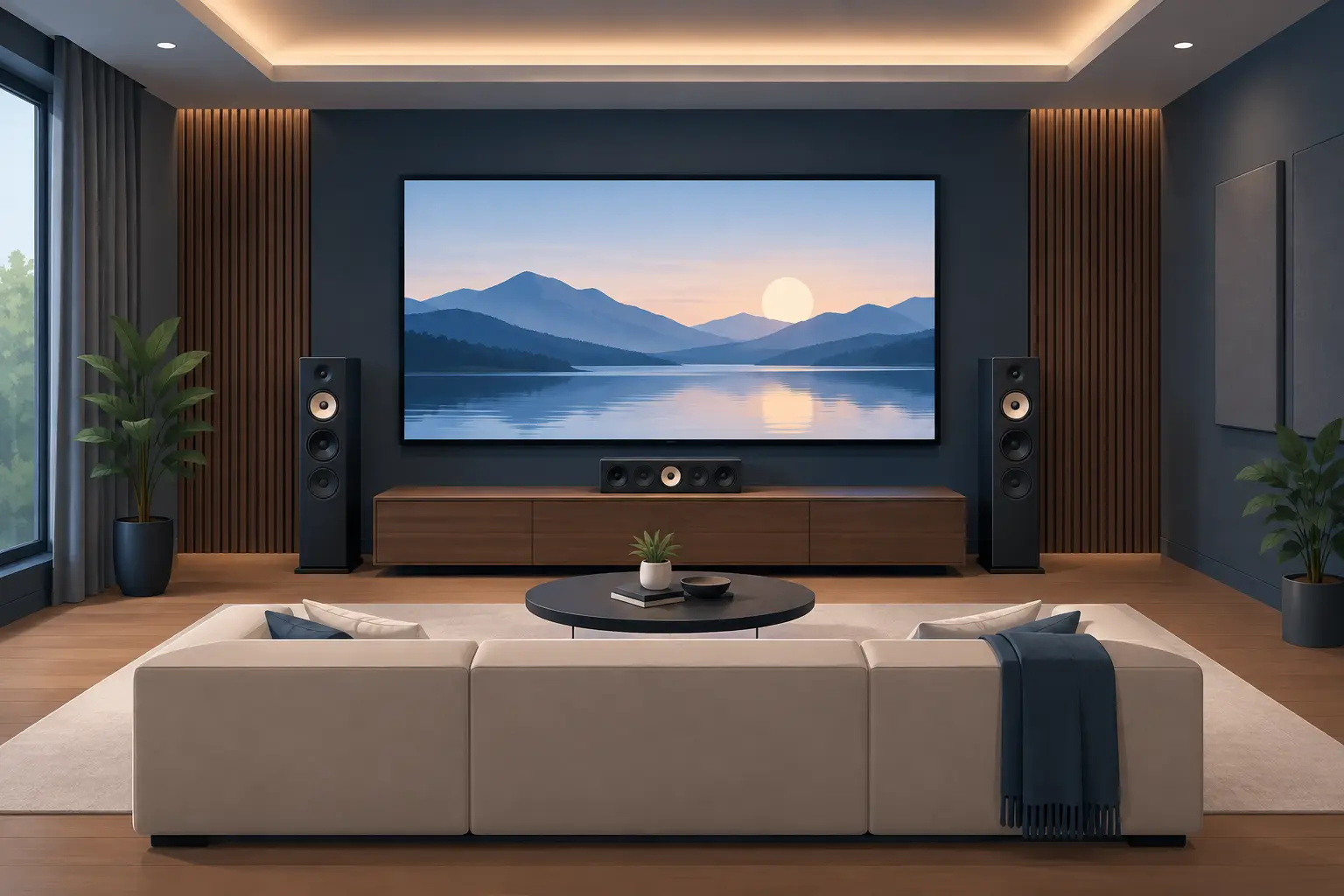
A memorable movie night is not created by a larger screen alone. It comes from the details that shape how the room feels: controlled light, clear dialogue, comfortable seating, and equipment chosen for the space rather than for a spec sheet. This home theater setup guide is designed to help you create that elevated experience, whether you are refreshing a living room or dedicating an entire room to cinema.
The most polished setups are intentional, not overloaded. Start with how you want to use the room, then select the display, sound, furnishings, and finishing touches that make every viewing feel considered.
Start With the Room, Not the Equipment
Measure the room before you fall in love with a television, projector, or oversized sectional. Note the wall available for a screen, the main seating position, window placement, ceiling height, and where power outlets already exist. These practical details determine what will look proportionate and perform well.
A dedicated media room gives you the most control. Darker walls, blackout treatments, and minimal reflective surfaces help preserve contrast and keep sound focused. A living room calls for a more flexible approach: a bright, high-quality TV, furniture that complements daily life, and audio components that deliver presence without overwhelming the decor.
Think about viewing distance early. For a 65-inch TV, seating roughly 6.5 to 8 feet away is often comfortable; an 85-inch screen generally suits a distance of around 8.5 to 10.5 feet. Personal preference matters here. Some viewers prefer an immersive, closer perspective, while others want a more relaxed field of view. The right size is the one that feels cinematic without requiring you to scan the screen.
Choose the Centerpiece: TV or Projector
For most homes, a premium 4K television is the straightforward choice. It offers excellent brightness for daytime viewing, crisp detail, integrated smart features, and a clean installation profile. OLED displays are especially compelling in rooms with controlled lighting because their deep blacks and exceptional contrast lend films a rich, dimensional quality. Mini-LED TVs are a strong alternative for brighter spaces, where higher peak brightness can make a visible difference.
A projector creates a different kind of occasion. It can provide a truly expansive image and a dedicated theater feel, particularly with a 100-inch or larger screen. The trade-off is that projectors demand more from the room. Ambient light needs attention, installation takes planning, and image quality depends heavily on the screen surface and projector placement.
Make screen placement comfortable
Mount the center of a TV close to seated eye level whenever possible. A screen positioned too high may look dramatic on the wall, but it becomes tiring during a two-hour film. If a fireplace dictates a higher placement, use a mount that can angle downward and choose lower seating to soften the viewing angle.
For a projector, confirm throw distance before purchasing. This is the distance between the lens and screen required to create your desired image size. Short-throw models can be useful in compact rooms, although their placement and screen requirements still deserve careful attention.
Build Sound Around Clear Dialogue
A beautiful picture loses its impact when voices sound distant, thin, or buried under music. Audio is the element that turns casual streaming into a convincing home cinema experience, and it deserves a meaningful portion of the budget.
A premium soundbar with a wireless subwoofer is an elegant solution for many living rooms. It reduces visual clutter, keeps setup simple, and can deliver wide, room-filling sound. Look for a model with a dedicated center channel or strong dialogue enhancement if television, sports, and movies are all part of your routine.
For a more enveloping result, a surround system remains the standard. A 5.1 arrangement includes front left, center, and right speakers, two surround speakers, and a subwoofer. It is an excellent foundation for most rooms. A 5.1.2 or 7.1.2 system adds height channels for Dolby Atmos content, producing effects that feel as if they move above and around the seating area.
The center speaker is especially important. Place it directly below or above the screen, aimed toward listeners, because it handles much of the dialogue. Position the left and right speakers at roughly ear height and slightly wider than the screen. Surround speakers should sit to the sides or just behind the main seating area rather than directly in front of it.
Do not hide a subwoofer in a cabinet. Low frequencies need space to breathe. Start near the front wall, then test a few locations if bass sounds muddy or uneven. Room shape, furniture, and flooring can change the result more than many shoppers expect.
Select Seating That Invites You to Stay
The most sophisticated home theater seating is not necessarily a row of oversized recliners. It is seating that supports the way you actually entertain, relax, and live. In a dedicated cinema room, reclining theater chairs with supportive headrests, cup holders, and discreet storage create a classic experience. In a multipurpose space, a deep sectional, tailored sofa, or pair of swivel chairs can feel more natural while still delivering serious comfort.
Prioritize seat depth, lumbar support, and sightlines. Every primary seat should have a clear view of the screen without twisting or leaning around another person. If you use a sectional, avoid placing the main viewer too far off-center. A compact ottoman can add flexible seating for guests without disrupting the room’s proportions.
Layer in texture with a substantial area rug, soft throws, and a few well-chosen pillows. These details make the room more inviting while helping absorb reflections that can make audio feel harsh. Choose fabrics and finishes that look refined under low light: performance velvet, textured boucle, warm leather, or matte wood all bring depth without distracting from the screen.
Control Light for a More Cinematic Picture
Light management is one of the highest-value upgrades in any home theater setup. Even an exceptional display can appear washed out when sunlight hits the screen or reflects across glossy surfaces.
Install blackout shades or lined drapery if the room has large windows. In a living room, layered window treatments offer a more flexible balance between everyday brightness and movie-night darkness. Dimmer switches are equally worthwhile. They allow you to maintain a soft, welcoming glow before the film starts, then lower the room lighting without leaving your seat in complete darkness.
Avoid placing lamps where they reflect directly on the display. Indirect lighting works best: wall sconces, low-level floor lamps, LED backlighting behind the TV, or subtle cove lighting can add atmosphere while protecting screen contrast. Keep bulbs warm, generally in the 2700K to 3000K range, for a comfortable and upscale feel.
Plan Wiring and Power Before the Final Styling
Visible cables can make premium equipment look temporary. Plan cable routes before mounting a screen or moving furniture into place. A recessed media box, paintable cable channel, or professionally installed in-wall cable system can preserve a clean, intentional finish.
Give the system enough power capacity. A quality surge protector is a minimum, while a battery backup can protect sensitive components and prevent abrupt shutdowns during short outages. If you are using multiple source devices, an AV receiver, gaming console, streaming box, and projector, label every cable at both ends. Future adjustments become far simpler.
Ventilation matters as well. Receivers, consoles, and streaming equipment generate heat, particularly inside closed cabinetry. Leave breathing room around components or choose furniture with ventilated panels. Quiet cooling is preferable to replacing an overheated device later.
Calibrate Before You Call It Finished
Once the room is assembled, spend an evening refining it. Use your TV’s movie or filmmaker picture mode as a starting point, rather than the overly vivid settings designed to stand out on a retail floor. Turn off unnecessary motion smoothing for films if you prefer a more natural, theatrical image.
Run your receiver or soundbar’s room calibration process, then listen critically to a familiar scene. Dialogue should remain clear at a comfortable volume, music should feel spacious, and bass should have weight without taking over the room. Small speaker adjustments can produce a larger improvement than a costly upgrade.
Keep a few premium essentials within reach: a charging station, a low-profile side table for drinks, a soft blanket, and a simple remote-control solution. The goal is not a room packed with technology. It is a space where every detail supports the pleasure of pressing play.
A thoughtfully finished theater earns its place in the home because it makes ordinary evenings feel more considered. Choose fewer, better pieces, give the room time to settle, and let comfort and craftsmanship set the tone for every scene.










Leave a comment