How to Choose a Dog Crate That Fits Beautifully
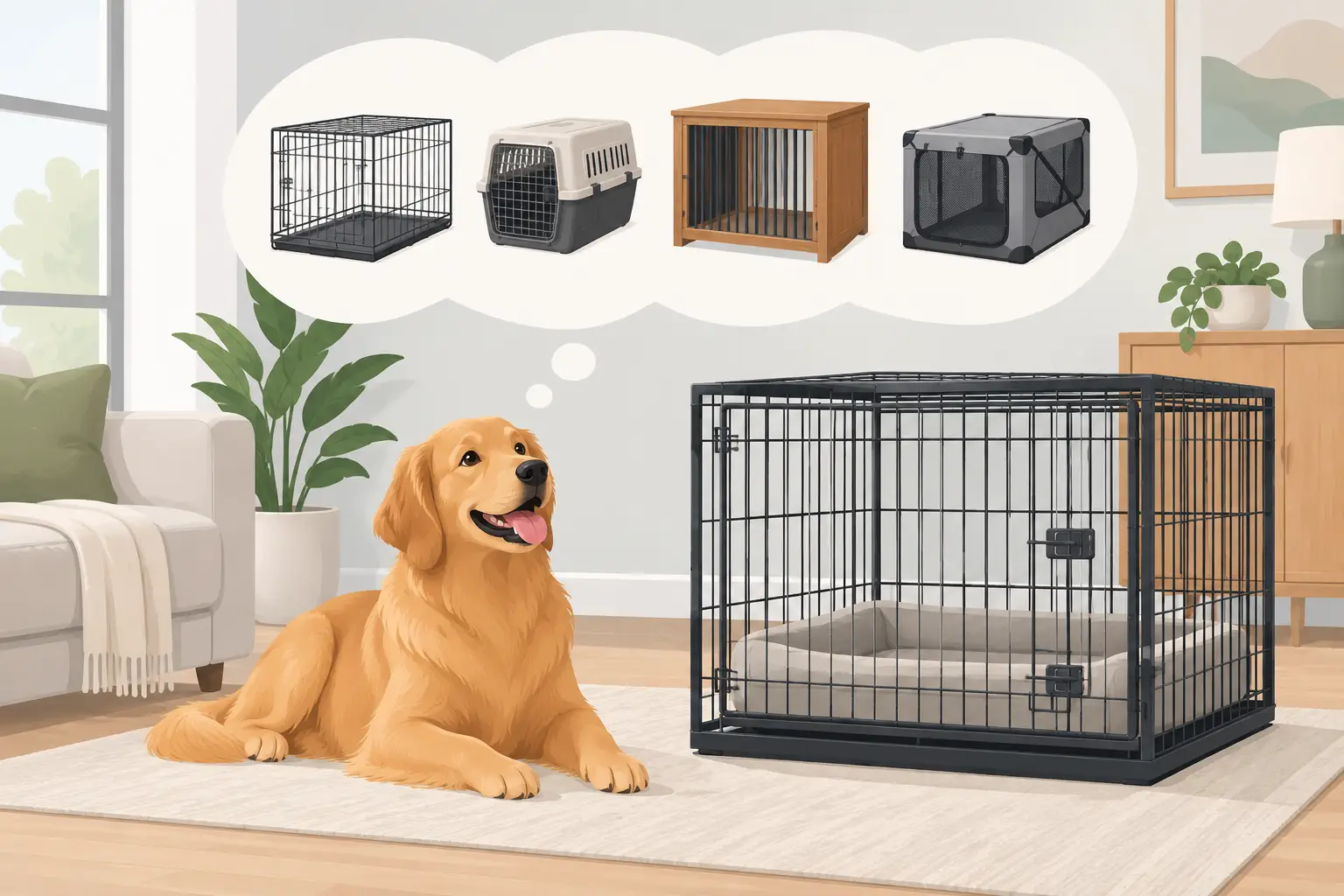
A dog crate can be a calm retreat, a practical training tool, and a surprisingly polished part of a well-designed home. The key to how to choose a dog crate is not simply buying the largest model or the most decorative one. It is finding a secure, comfortable fit for your dog while selecting a style and material that works with your daily routine and living space.
A thoughtfully chosen crate gives your dog a place to settle when guests arrive, travel plans call, or the household becomes busy. It should feel private and inviting, never like a place of punishment. Start with your dog’s body and temperament, then consider the craftsmanship, finish, and convenience features that make the crate worth living with every day.
How to Choose a Dog Crate by Size
Correct sizing is the foundation of a crate your dog will actually use comfortably. Your dog should be able to stand without crouching, turn around easily, and lie down in a natural position with legs tucked or stretched as they prefer. A crate that is too tight becomes uncomfortable quickly. One that is dramatically oversized can make house-training more difficult for puppies, since they may use one end as a bathroom and rest at the other.
Measure your dog while standing from the tip of the nose to the base of the tail, then add two to four inches for length. Measure from the floor to the top of the head or ears, whichever is higher, and add two to four inches for height. Width matters too, particularly for broad-chested breeds. Your dog should not have to squeeze through the doorway or curl into an awkward position to rest.
For a puppy, choose a crate sized for adult dimensions and use a divider panel to reduce the interior space during training. This offers long-term value without compromising the structure of the routine you are building now. If your puppy is likely to grow quickly, adjustable space is more refined and practical than repeatedly replacing undersized crates.
Consider how your dog sleeps
A dog who sleeps tightly curled may be content with a more compact footprint than a dog who sprawls across the floor. Senior dogs, long-bodied breeds, and dogs with joint sensitivity often benefit from a little extra room to reposition themselves. For these dogs, prioritize a wide door opening and enough floor space for supportive bedding.
Select the Right Crate Material for Your Lifestyle
The best crate material depends on where it will be used, your dog’s behavior, and the look you want for your home. Each option has a distinct advantage, and premium choices tend to stand out through stronger construction, more considered finishes, and details that make everyday use easier.
Wire crates offer airflow and flexibility
Wire crates are a familiar choice for home training because they provide excellent visibility and ventilation. Many fold flat for storage or travel, and models with divider panels adapt especially well to growing puppies. They suit dogs who are comfortable seeing their surroundings and owners who want an easy-to-clean, functional design.
The trade-off is visual presence. A basic wire crate can feel utilitarian in a carefully furnished living room or bedroom. A fitted crate cover, tailored mat, or elevated placement can soften its appearance while giving your dog a greater sense of privacy. Check that the wire gauge is sturdy, the latches close securely, and there are no sharp points near the door or floor tray.
Plastic crates create a more enclosed retreat
Hard-sided plastic crates are often preferred for travel and for dogs who relax better in a den-like environment. Their enclosed sides can reduce visual stimulation, while ventilation openings maintain airflow. They are also straightforward to wipe down after muddy walks, accidents, or a trip to the veterinarian.
Because airflow is more limited than in a wire design, plastic crates are usually best in climate-controlled spaces and should never be covered in a way that restricts ventilation. Look for a secure metal door, strong connectors, and a base that does not flex under your dog’s weight.
Furniture-style crates blend into elevated interiors
For design-conscious homes, furniture-style dog crates offer a more intentional alternative to a traditional kennel. These pieces may resemble a side table, console, or nightstand, helping the crate earn its place in an open-plan living area, bedroom, or home office. A well-made version can provide a usable tabletop while giving your dog a defined place to rest nearby.
This is where quality matters most. Look for durable wood or metal construction, a finish that can tolerate cleaning, and interior dimensions that are genuinely appropriate for your dog. Decorative crates should still have proper ventilation, secure hardware, and enough strength for your dog’s habits. They are often ideal for calm, crate-trained dogs, but may not be the right answer for a powerful chewer or an anxious escape artist.
Soft-sided crates favor portability
Soft-sided crates are lightweight, easy to carry, and useful for short trips, hotel stays, or quiet dogs who already understand crate boundaries. They are not designed for dogs who chew, claw, or push against enclosures. Think of them as a portable lounge, not a training solution for an untested puppy.
Match the Crate to Your Dog’s Temperament
A crate should support your dog’s personality rather than challenge it. A confident dog may happily rest in an open wire crate with a plush bed. A dog that startles easily may prefer partial visual coverage and a quieter corner of the room. Dogs that chew or attempt to escape need a sturdier design, carefully checked locking points, and training that addresses the underlying stress rather than simply adding more confinement.
If your dog has separation anxiety, consult your veterinarian or a qualified trainer before relying on a crate for long periods. Some anxious dogs can injure themselves trying to get out. The safest crate is one that works alongside thoughtful training, exercise, enrichment, and a predictable daily rhythm.
Look Closely at Doors, Hardware, and Daily Care
A beautiful crate becomes less appealing if the door rattles, the latch sticks, or cleaning requires a complete disassembly. Door placement affects where the crate can live. A front door suits a wall placement, while double-door designs offer more flexibility in a room where furniture arrangement may change.
Pay attention to the quality of the latch. It should be simple for an adult to operate but difficult for a clever dog to nudge open. Rounded edges, non-slip feet, reinforced corners, and a removable tray are modest details that make a meaningful difference over time.
Also consider the crate’s cleaning requirements before choosing a finish. A removable base and washable bedding make maintenance far easier. For furniture-style designs, confirm that the surface can withstand damp paws and routine wiping without staining or warping.
Create a Crate Your Dog Wants to Enter
The crate itself is only half the experience. Place it away from cold drafts, direct sun, and high-traffic bottlenecks, while keeping it close enough that your dog still feels part of family life. Add a properly fitted bed or mat, but avoid thick bedding for young puppies or dogs who are likely to chew and swallow fabric.
Introduce the crate gradually. Leave the door open, place a few treats inside, and allow your dog to explore without pressure. Serve meals near or inside the crate, then build toward short periods with the door closed. Calm, positive repetition creates a far better result than forcing a dog into an unfamiliar enclosure.
Crates are not intended for all-day confinement. Puppies need frequent bathroom breaks, and adult dogs need movement, companionship, and mental stimulation. Used thoughtfully, though, a crate can bring welcome structure to a busy household and give your dog a space that is entirely their own.
Choose the crate that respects your dog’s comfort as much as your home’s style. When the fit is right and the introduction is patient, it becomes less like pet equipment and more like a composed, comforting part of everyday life.









Leave a comment