How to Arrange Living Room Furniture Well
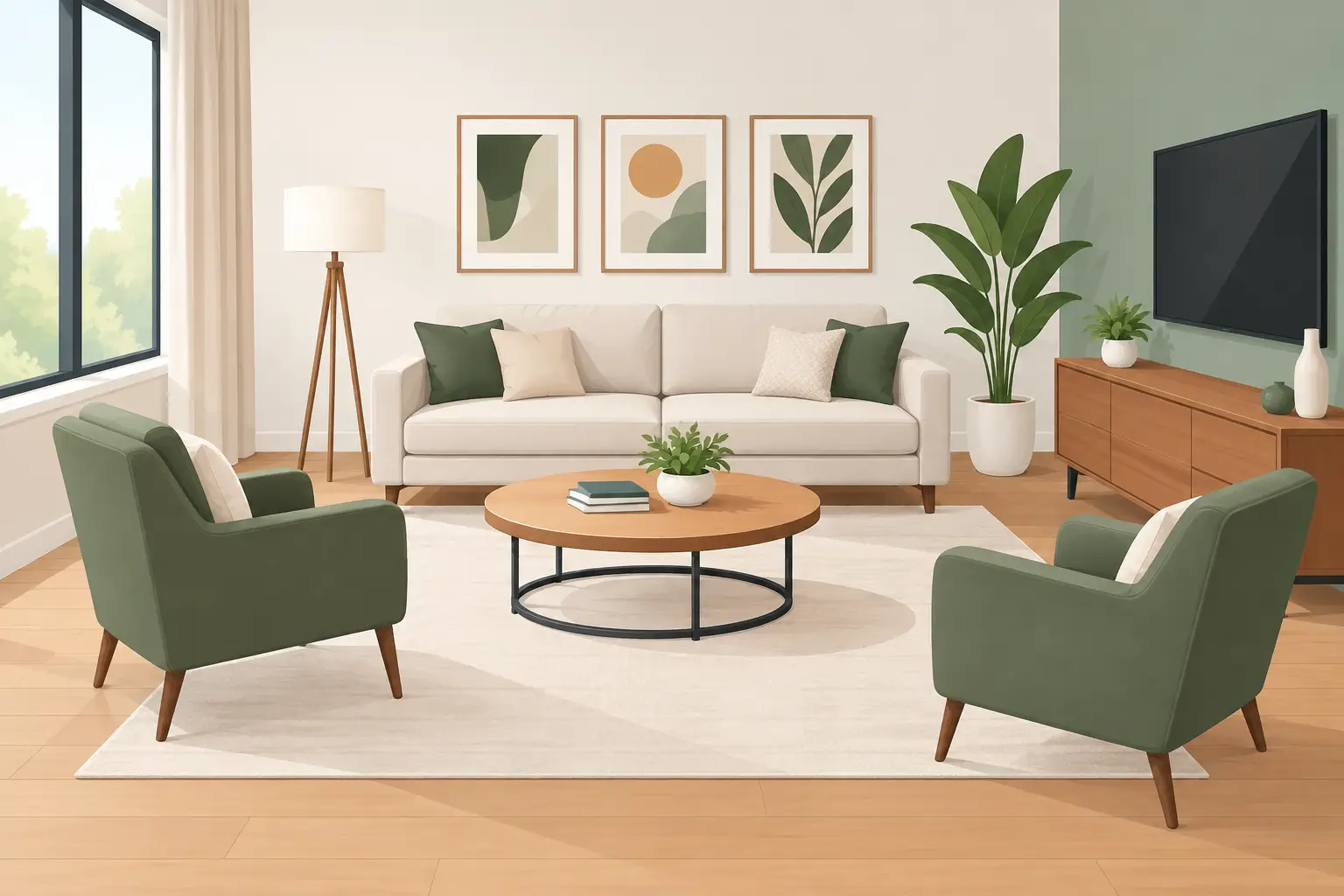
A beautiful sofa can lose its impact when it is pressed against the wrong wall, while a modest room can feel distinctly high-end when every seat has a purpose. To arrange living room furniture well, begin with the way you actually live there: where conversation happens, how people enter, what gets watched, and which views deserve attention. The goal is not to fill every open area. It is to create a composed setting that feels comfortable, intuitive, and entirely your own.
Start With the Room’s Real Focal Point
Every well-composed living room needs a visual anchor. In some homes, that is a fireplace, a picture window, built-in shelving, or a media wall. In others, especially newer apartments and open-plan homes, the focal point needs to be created with a large artwork, a sculptural console, or an exceptional area rug.
Position your main seating to acknowledge that feature without forcing the entire room into a rigid layout. A sofa facing the fireplace is classic for good reason, but it is not the only solution. If the television is the practical priority, consider mounting it above or beside the focal point only when the proportions work. A dedicated media wall can look far more refined than asking a mantel or gallery wall to do too much.
When a room has competing focal points, choose the one that serves your daily routine. A fireplace may be the architectural star, but if your family gathers for movie nights, orienting the seating toward the television can be the better choice. Balance the secondary feature with accent lighting, art, or a pair of chairs rather than treating it as an afterthought.
Arrange Living Room Furniture Around Conversation
The most inviting rooms make conversation feel effortless. Seats should face one another or sit at an angle that allows eye contact without anyone having to twist around. A sofa paired with two lounge chairs is often more polished and flexible than matching every piece in a traditional set.
Keep seating close enough to connect. In a compact room, that may mean placing two chairs opposite the sofa with a coffee table between them. In a larger space, use a sectional and additional chairs to form a generous U- or L-shaped conversation area. If people need to raise their voices to talk, the layout is probably too spread out.
Coffee table placement matters just as much. Leave roughly 14 to 18 inches between the sofa and table, close enough to set down a drink but spacious enough to stand comfortably. Side tables should be within easy reach of every primary seat. These quiet details make a room feel considered, especially when you are entertaining.
Measure Before You Commit
Premium furniture deserves more than a hopeful guess. Before ordering or moving a single piece, measure the room, note door swings, and mark the location of windows, outlets, radiators, and floor vents. Then map the largest pieces with painter’s tape on the floor. You will see the room’s circulation patterns before committing to a layout that feels cramped.
Aim for clear walkways of about 30 to 36 inches in high-traffic areas. A path from the entry to the sofa, kitchen, patio door, or hallway should remain obvious. If a guest has to weave around an ottoman or squeeze behind a chair, the room will never feel fully relaxed.
Scale is the other essential measurement. An oversized sectional can provide remarkable comfort in a large family room, but it may swallow a city apartment. Conversely, a small loveseat and delicate coffee table can look lost beneath high ceilings. Consider the visual weight of each item, not only its dimensions. Low, streamlined furniture reads lighter, while deep cushions, broad arms, dark finishes, and tall backs create more presence.
Let the Rug Define the Seating Area
An area rug does more than soften the floor. It gives the furniture a shared foundation and prevents a living room from feeling like a collection of pieces placed along the perimeter.
In most layouts, the rug should be large enough for the front legs of the sofa and chairs to rest on it. In a more spacious room, placing all furniture legs on the rug creates an especially tailored result. A too-small rug is one of the fastest ways to make carefully selected furniture look disconnected.
For an open-concept home, use rugs to establish distinct zones. One rug can define the main conversation area, while a second can anchor a reading chair near a window or delineate a separate lounge space. Choose complementary colors and textures rather than exact matches. The result feels curated, not overly coordinated.
Pull Furniture Away From the Walls When You Can
Pushing every piece to the edge of the room may seem like the best way to create space, but it often produces the opposite effect. The center feels empty, and the seating feels disconnected. Even pulling a sofa forward by a few inches can give the layout more depth and intention.
This approach is especially effective in larger rooms. Float a sofa in the center, then use a slim console table behind it to add storage, display lighting, or define the transition to a dining area. A backless bench, paired ottomans, or low bookcase can also create a graceful boundary without blocking sightlines.
There are exceptions. In a narrow room, keeping one side of the layout close to the wall may be necessary to preserve a walkway. The key is to avoid treating wall placement as the default. Let proportion and movement decide.
Build Layers Instead of Adding Clutter
Once the major pieces are in place, add the elements that make the room feel finished: lighting, occasional tables, pillows, throws, and art. These layers should support the arrangement, not compete with it.
Use more than one source of light. An overhead fixture gives the room presence, but floor lamps and table lamps create the warmer, more flattering light needed for evenings. Place lighting beside reading seats and near the ends of a sofa to balance the room visually. A single lamp stranded in one corner rarely feels luxurious.
Accent furniture should earn its place. An ottoman can act as extra seating, a footrest, or a tray-topped table. A nesting table can appear when guests arrive and tuck away afterward. In smaller homes, these adaptable pieces provide function without sacrificing the calm, edited look that makes a space feel elevated.
Design for Your Daily Routine
The most impressive layout is not always the most practical one. If children or pets use the room every day, prioritize durable upholstery, rounded corners, and pathways that make movement easy. If the room doubles as a work-from-home setting, reserve a quiet edge for a compact desk or a comfortable chair with a nearby outlet.
For frequent entertaining, provide flexible seating rather than overfilling the room with permanent chairs. Two substantial poufs or a pair of upholstered stools can be tucked under a console and brought forward when needed. They preserve an open look while ensuring guests are never left standing.
Consider storage early, too. Closed cabinets, media consoles, and storage ottomans keep remotes, blankets, games, and everyday essentials out of sight. That restraint is part of what gives a premium room its ease. The space can be lived in fully without looking perpetually in use.
Finish With a View Worth Sitting In
Before you call the arrangement complete, sit in every primary seat. Check the view, the reach to a table, the lighting, and the route in and out of the room. Notice whether the furniture frames the best feature or obscures it. Small adjustments, even shifting a chair six inches or turning it slightly inward, can change the entire mood.
A thoughtfully arranged living room should feel polished from the doorway and comfortable from the sofa. Choose pieces with lasting materials, generous comfort, and a point of view, then give each one enough room to be appreciated. With a curated approach like the one Viridin brings to elevated home finds, the result is more than a furnished room: it is a setting that makes everyday time at home feel better.









Leave a comment