How to Choose the Right Portable Power Station
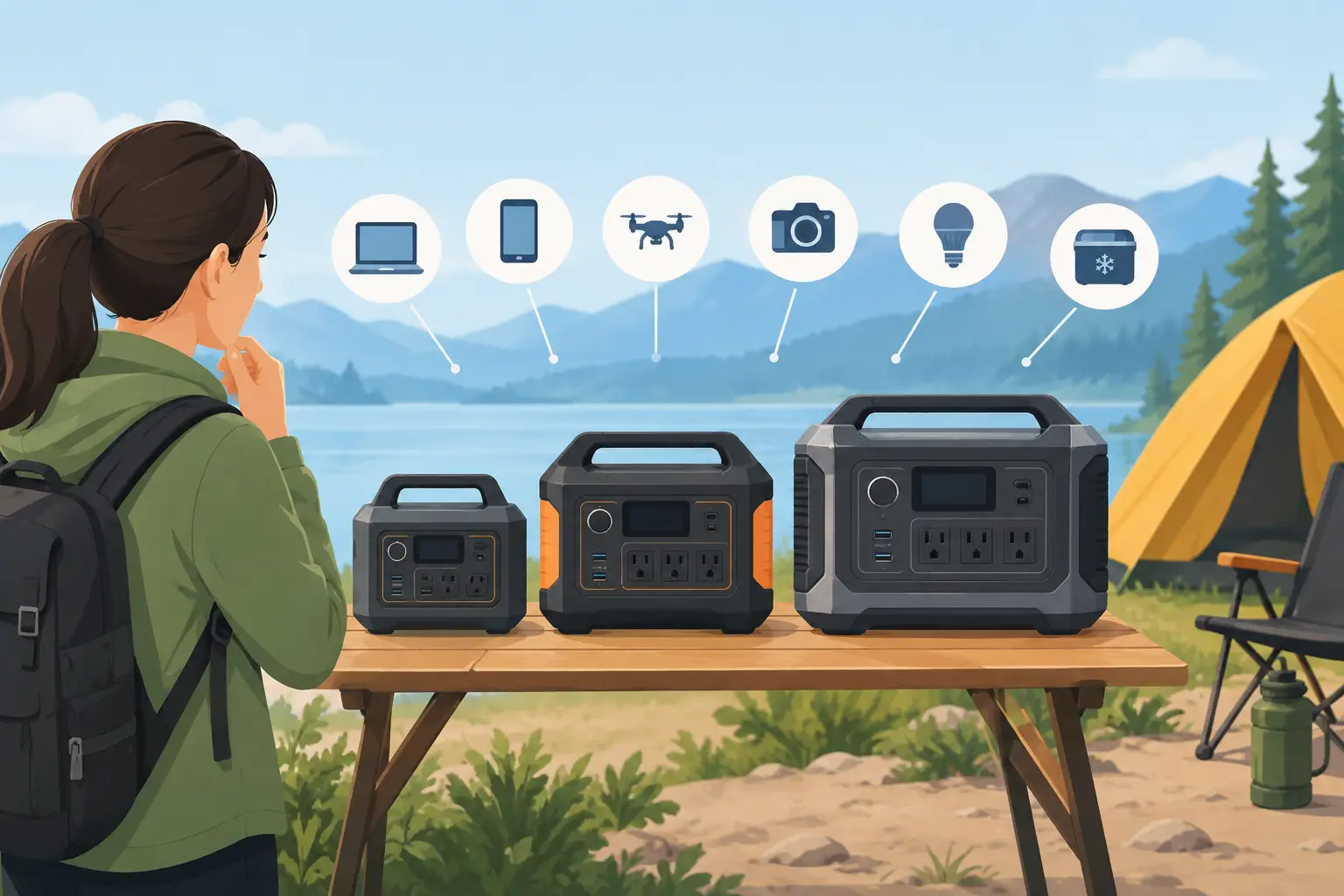
A dead phone during a storm is inconvenient. A silent refrigerator, a disabled CPAP machine, or a laptop that cannot finish an urgent workday is something else entirely. A portable power station brings a composed layer of backup capability to the places where your routine cannot simply pause – from a polished home office to a well-appointed campsite.
Unlike loud, fuel-powered generators, these compact battery systems are designed for quiet, indoor-friendly electricity. The right model can keep essential devices running, support weekend escapes, and make everyday outdoor entertaining feel less dependent on the nearest outlet. Choosing well comes down to matching power to the way you actually live.
What a Portable Power Station Does
A portable power station stores electricity in a rechargeable battery and delivers it through familiar outlets and ports. Most include AC wall outlets for household devices, USB-A and USB-C ports for personal technology, and 12V vehicle-style outputs for compatible accessories. They can usually recharge from a wall outlet, a vehicle, or optional solar panels.
This makes them especially appealing for apartment residents, homeowners, road-trippers, and anyone who values a more self-sufficient setup without the noise, fumes, and maintenance associated with a conventional generator. During a brief outage, a power station can keep your phone, router, lamp, and laptop online. At the campground or patio, it can power a projector, speaker, electric cooler, or coffee maker without disrupting the atmosphere.
Still, a power station is not automatically a whole-home solution. It is best viewed as refined backup power for selected essentials. Large appliances with heating elements, central air conditioning, and hardwired home systems can demand more energy than many portable models can reasonably provide.
Start With Capacity, Not the Product Size
The most useful specification is battery capacity, measured in watt-hours, or Wh. Think of watt-hours as the size of the energy reserve. A 500Wh station holds roughly half the energy of a 1,000Wh station, although real-world runtime will be somewhat lower due to power conversion and the device’s own efficiency.
For light personal use, a compact station in the 250Wh to 500Wh range may be enough. It can recharge phones and cameras many times, support a laptop, and run a small light or router for a limited period. This is a smart fit for day trips, occasional outages, and minimal packing.
A 700Wh to 1,500Wh range suits more demanding households and more comfortable travel. It offers greater flexibility for a mini fridge, CPAP, television, electric cooler, or several smaller devices at once. For extended outages, RV use, or a larger collection of essentials, 2,000Wh and above may be the better category, particularly when capacity expansion is available.
The key question is not, “What is the largest unit I can buy?” It is, “What do I need to keep running, and for how long?” Bigger capacity adds flexibility, but it also adds cost, weight, and storage demands.
A Simple Runtime Estimate
To estimate runtime, divide the power station’s watt-hour rating by the wattage your device uses. Then reduce the result by about 10% to 20% to account for energy lost during conversion.
For example, a 1,000Wh power station running a 60-watt lamp, router, and charging setup should provide approximately 13 to 15 hours of use. That same station powering a 500-watt appliance may last closer to 1.5 to 2 hours. Device labels, chargers, and manuals usually list wattage. If they do not, a plug-in power meter can provide a more accurate picture.
Check Output Before You Assume It Can Run an Appliance
Capacity tells you how long a unit can work. Output tells you what it can power at all. This number is measured in watts and is one of the most commonly overlooked details.
A station with a 1,000-watt continuous AC output can run devices that collectively require up to 1,000 watts at a time. That could cover a laptop, lighting, a TV, and a small fan with room to spare. It may not cover a high-wattage kettle, space heater, hair dryer, or full-size microwave.
Pay attention to surge power as well. Refrigerators, pumps, and some power tools can briefly pull far more electricity when they start than they need while running. A station may handle an appliance’s everyday wattage but shut down if its surge allowance is too low.
For sensitive electronics, look for a pure sine wave inverter. It delivers electricity in a form suited to laptops, televisions, cameras, medical equipment, and other modern devices. Most premium portable power stations offer this feature, but it is still worth confirming.
Choose the Ports That Fit Your Everyday Setup
The most elegant power station is one that removes the need for a tangle of adapters. Consider what you use most often and whether the station can support it directly.
USB-C Power Delivery is particularly valuable for current laptops, tablets, and phones. A high-wattage USB-C port can replace a separate laptop charger and free up AC outlets for other needs. Multiple AC outlets make shared use easier during an outage or group trip, while regulated 12V outputs can support certain coolers, vehicle accessories, and camping equipment.
A clear display also matters. Look for one that shows remaining battery percentage, incoming charging power, current output, and estimated time to empty or full. Those details turn backup power from a guessing game into a practical household tool.
Recharge Speed Changes How Useful It Feels
A station with ample capacity is only as convenient as its recharging options. Fast wall charging is valuable when a storm is approaching or when you need to prepare for a spontaneous getaway. Some larger models can recharge in a few hours, while others require much longer. Neither is inherently wrong, but the difference should shape your expectations.
Solar charging adds a compelling degree of independence for camping, RV travel, and prolonged outages. Its performance depends on panel wattage, sunlight, weather, placement, and the station’s solar input limit. A panel may be rated for a certain output, but cloudy conditions and imperfect angles will reduce what it produces.
Vehicle charging is useful for topping up while driving, though it is generally slower than wall charging. If solar flexibility is central to your purchase, confirm that the station accepts the panel type and input range you plan to use. Compatibility is more meaningful than a vague claim of solar readiness.
Battery Chemistry and Build Quality Matter
Lithium iron phosphate, often labeled LiFePO4 or LFP, has become a preferred battery chemistry for many high-end power stations. It typically offers a longer cycle life than older lithium-ion designs, which makes it appealing for frequent use and long-term ownership. It is often slightly heavier for the same capacity, but that trade-off can be worthwhile when durability is the priority.
Portability also deserves an honest look. A compact 300Wh unit may be easy to carry one-handed. A 2,000Wh station can be substantial enough to require two hands, built-in wheels, or a carefully planned storage location. Consider where it will live between uses, how far you will carry it, and whether you can move it comfortably when the power is out.
Thoughtful construction adds value: secure handles, stable feet, protected ports, an easy-to-read display, and a quiet cooling system all improve the ownership experience. These are the details that make a premium device feel considered rather than merely capable.
Build a Priority List for Outages
When weather is uncertain, decide what deserves power before the lights go out. A focused plan preserves battery life and reduces stress. Your priorities may include a refrigerator for medication or food, a Wi-Fi router for communication, phones, a lamp, a fan, a CPAP, or a laptop.
Avoid connecting every device simply because outlets are available. Heating appliances consume energy quickly, and decorative or nonessential electronics can wait. If refrigeration is critical, cycle the refrigerator strategically and keep its door closed as much as possible. For medical equipment, verify the device’s wattage, surge requirement, and backup guidance with its manufacturer or care provider rather than relying on assumptions.
Portable Power Station Questions Worth Asking
Can a power station replace a gas generator?
For indoor essentials, quiet outdoor use, and shorter outages, it can be a far more comfortable choice. For high-draw appliances, multi-day whole-home power, or equipment requiring 240V service, a traditional generator or professionally designed home backup system may still be necessary.
Can it be used indoors?
Battery power stations do not produce combustion fumes, so they are generally intended for indoor use. Keep ventilation openings clear, place the unit on a stable dry surface, and follow the manufacturer’s temperature and safety instructions. Never confuse it with a gas generator, which must remain outdoors.
How should it be stored?
Store the unit in a cool, dry place away from direct sunlight and extreme temperatures. Check the manufacturer’s recommended storage charge level and recharge schedule. A power station set aside for emergencies should be tested periodically, not discovered empty when it is needed most.
The best choice is not necessarily the highest-capacity portable power station on the shelf. It is the one that fits your essential devices, your space, and the level of confidence you want when plans change. Keep it charged, keep your priority list nearby, and let the next outage or off-grid evening feel considerably more prepared.













Leave a comment