Leather Sofa Versus Performance Fabric for Your Home
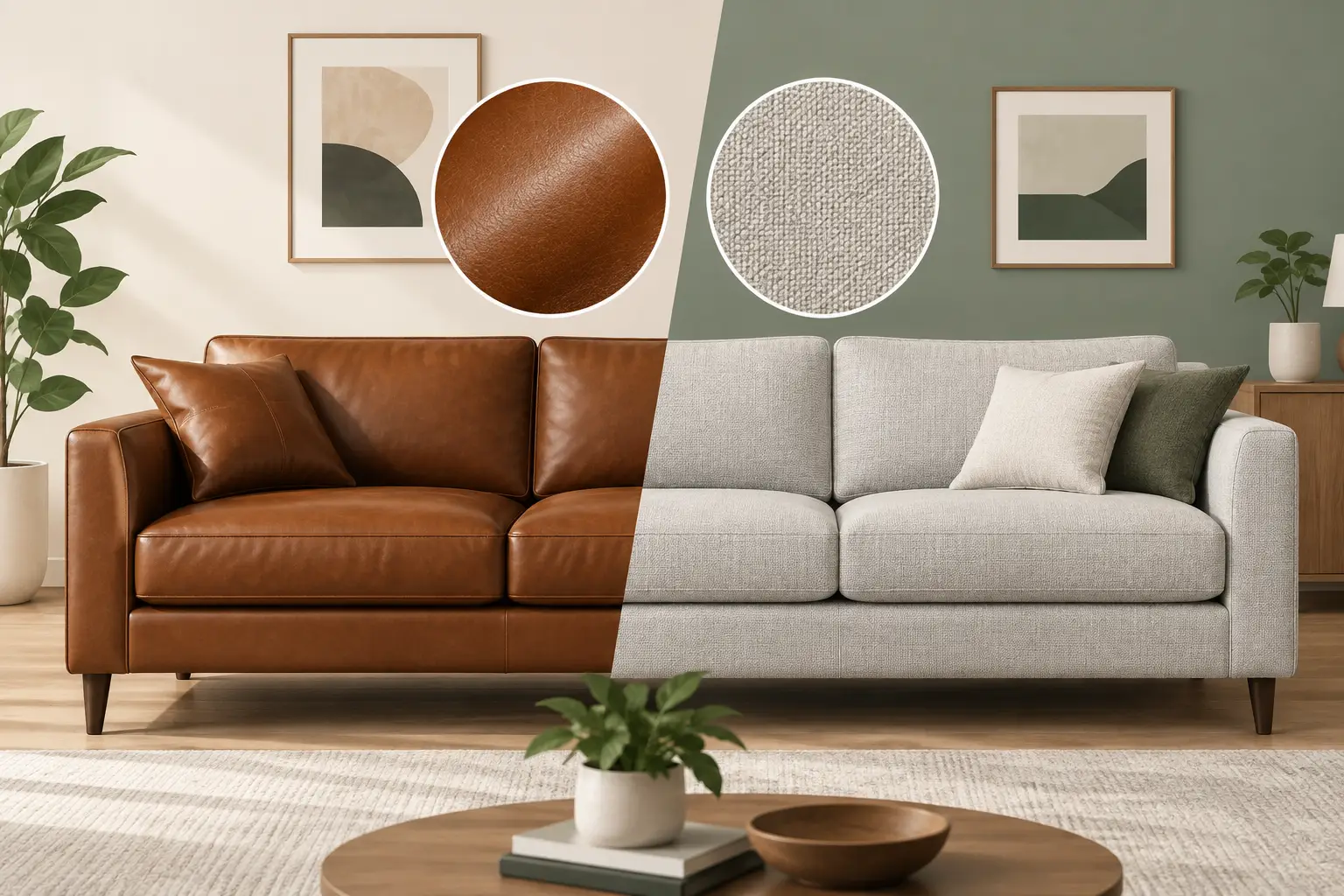
A beautiful sofa has to survive more than a showroom moment. It has to handle Friday movie nights, a dog claiming its favorite cushion, coffee set down in a hurry, and the daily pleasure of coming home. The leather sofa versus performance fabric decision comes down to how you want your living room to look, feel, and wear over time.
Both materials can deliver a high-end focal point. Leather offers unmistakable character and a tailored, substantial presence. Performance fabric brings softness, flexibility, and remarkable resilience for active homes. The better choice is not simply the more luxurious one. It is the one that fits the way you actually live.
Leather Sofa Versus Performance Fabric: The Real Difference
Leather and performance fabric solve different design problems. Leather is a natural material with variation, patina, and a distinct hand feel. A quality hide develops more personality as it ages, often becoming richer and more relaxed rather than looking worn out. It is especially compelling in refined living rooms, offices, and open-concept spaces where the sofa needs visual weight.
Performance fabric is engineered upholstery designed to resist the realities that make ordinary fabric difficult: spills, stains, fading, abrasion, and frequent use. It can look like a classic woven linen, a plush velvet, a crisp boucle, or a modern textured weave while offering a more forgiving surface. For shoppers who want sophisticated color and a softer lounge-ready experience, that range is a major advantage.
Neither option is automatically better. A leather sectional may be the enduring centerpiece of a quieter household, while a performance-fabric sofa can be the smarter premium investment for a home with children, pets, or constant entertaining.
The Case for Leather: Presence, Patina, and Easy Surface Cleanup
Leather makes an immediate statement. Its clean lines, natural grain, and warm depth complement everything from sculptural contemporary interiors to classic transitional rooms. It is one of the few upholstery materials that can look equally at home beside pale oak and stone as it can alongside dark walnut, brass, and dramatic artwork.
For everyday cleanup, leather is refreshingly direct. Most small spills can be blotted before they soak in, and pet hair generally sits on the surface rather than embedding itself in the upholstery. That can make it a practical choice for pet owners, provided their pets are not inclined to scratch furniture.
The long-term appeal of leather is its aging process. Full-grain and top-grain leather may show creases, subtle color shifts, and a softened finish over the years. Those changes are part of the material’s appeal, not a defect. A well-chosen leather sofa can feel more personal and handsome after a decade of use.
There are trade-offs. Leather can feel cool when you first sit down in winter and warmer in direct sunlight. It can also show claw marks, pen marks, and sharp-object damage more clearly than a tightly woven performance textile. Lower-grade bonded leather and heavily corrected finishes may not age with the same grace, so material quality matters as much as the word “leather” on a product description.
Choose leather when character matters most
Leather is especially well suited to design-conscious adults who value a tailored, elevated room and do not mind a little evidence of real life. It is also an excellent fit for homes where adults entertain often, where shedding pets are a consideration, or where you prefer a sofa that gains distinction rather than stays visually unchanged.
Why Performance Fabric Works Harder in Busy Homes
Performance fabric has changed what family-friendly upholstery can look like. It is no longer limited to stiff, overly casual materials or uninspired neutral colors. Premium options offer nuanced texture, dimensional weaves, and soft finishes that make a room feel inviting without sacrificing polish.
Its defining advantage is stain resistance. Many performance textiles are made with fibers or treatments that help liquid bead on the surface, giving you time to blot a spill. They also tend to stand up well to abrasion, making them an excellent choice for a favorite family-room sofa that sees daily use from people, pets, and guests.
Comfort is another reason shoppers choose fabric. It feels consistent through the seasons, tends to be warmer and softer on bare skin, and often creates the relaxed, sink-in quality people want in a lounge space. If your ideal evening involves curling into the corner with a blanket, fabric has a natural edge.
Performance fabric is not invincible. A light-colored sofa still needs prompt attention after a spill, and certain stains may require the manufacturer’s recommended cleaning method. The word “performance” is not a universal specification, either. Check whether a fabric is designed for stain resistance, moisture resistance, UV resistance, high abrasion, or all of the above. Those details affect how it performs in your particular home.
Choose performance fabric when flexibility matters most
Performance fabric is a standout choice for young families, pet owners, apartment dwellers, and anyone who wants more freedom with color and texture. It lets you select a soft ivory, a saturated green, or a richly textured neutral with greater confidence than conventional upholstery would allow.
Consider the Feel of the Room, Not Just the Sofa
A sofa is a large visual surface, so its material changes the mood of the entire room. Leather reflects light differently than fabric, typically giving the space more definition and structure. A camel, cognac, charcoal, or deep brown leather sofa can ground an airy room that otherwise feels too delicate or diffuse.
Fabric absorbs more light and softens a room’s edges. It is especially effective in bedrooms, media rooms, and relaxed living spaces where comfort should be visible from the doorway. Textured performance fabric can also add quiet dimension to a neutral palette without introducing a busy pattern.
Think about your existing finishes. Leather often pairs beautifully with wood, metal, stone, and vintage-inspired decor. Performance fabric is extraordinarily adaptable, particularly if your home includes upholstered dining chairs, layered rugs, drapery, or colorful accent pieces. The goal is not to match every surface, but to create a room with enough contrast to feel intentional.
Cost, Longevity, and What Value Really Means
A leather sofa often carries a higher upfront price, particularly when made with quality hides, kiln-dried hardwood framing, supportive suspension, and tailored cushioning. Its value comes from longevity and the material’s ability to age attractively. With appropriate care, it can remain a defining piece in your home for many years.
Performance fabric can offer a more accessible entry into premium upholstery, though luxury-grade textiles and exceptional construction can still command a significant price. Its value is practical: you can use the sofa generously without guarding it every minute. That confidence has real worth in a household where the living room is the center of daily life.
For either material, look beyond the cover. A sofa’s comfort and staying power depend on its frame, joinery, suspension, cushion fill, and cushion construction. A beautifully marketed upholstery fabric cannot compensate for a weak frame or cushions that lose support quickly. Prioritize a quality foundation first, then choose the upholstery that suits your lifestyle.
Care That Preserves a Premium Look
Leather benefits from simple, consistent care. Keep it out of prolonged direct sunlight when possible, dust it with a soft cloth, blot spills promptly, and use a leather conditioner only as recommended for that specific finish. Avoid harsh household cleaners, which can strip protective coatings or alter the color.
Performance fabric should be vacuumed regularly with an upholstery attachment to remove dust and grit. Blot spills rather than rubbing them, and follow the cleaning code supplied by the manufacturer. Before using any cleaner, test it in an inconspicuous area. Even high-performance textiles deserve careful treatment if you want the upholstery to retain its refined finish.
Make the Choice That Lets You Live Well
Choose leather if you want natural character, easy hair cleanup, and a sofa that becomes more distinguished with age. Choose performance fabric if you want softer comfort, wider design freedom, and everyday protection from spills, paws, and heavy use.
The most satisfying sofa is not the one you have to protect from your life. It is the one that supports it beautifully – whether that means the warm patina of leather or the polished resilience of performance fabric.










Leave a comment